What is the Best Time of Year to Visit New Mexico
New Mexico is a year-round destination, but the best time to visit depends heavily on where you are going and what you want to do. Elevation makes a huge difference here: summer can be brutally hot in the southern deserts while mountain towns remain comfortable, and winter can bring deep snow to northern New Mexico while lower elevations stay relatively mild.
For most first-time road trips, late September through October is the best overall time to visit New Mexico. Temperatures are comfortable across much of the state, summer thunderstorms are winding down, fall colors appear in the mountains, and many of New Mexico’s biggest events take place during this time.
Spring — March through May
Spring is one of the best times to explore New Mexico’s deserts, archaeological sites, and lower-elevation hiking areas.
March can still feel like winter in the mountains, but temperatures warm quickly across central and southern New Mexico through April and May. This is an especially good season for White Sands National Park, Carlsbad Caverns National Park, Las Cruces, and Alamogordo.
Around Las Cruces, the trails of the Organ Mountains, and Mesilla Valley Bosque State Park are much more comfortable before summer heat arrives. Farther west, spring is also a great time to explore Silver City, City of Rocks State Park, and the lower elevations around the Gila National Forest.
Central New Mexico is also pleasant in spring. You can hike around Albuquerque, explore Petroglyph National Monument, visit Tent Rocks, or road-trip through the lower Rio Grande Valley before the hottest part of the year.
The biggest downside is wind. March and April are often windy across the state, with occasional dust storms in desert areas. In northern New Mexico, snow can linger in the mountains well into spring, so places like Taos, Red River, and the high country around Santa Fe may still have winter conditions even when southern New Mexico is warm.
Best for: White Sands, desert hiking, Las Cruces, Carlsbad, southern New Mexico, road trips, avoiding summer heat
Summer — June through August
Summer is the best season for exploring New Mexico’s mountains.
High-elevation destinations like Taos, Red River, Angel Fire, Ruidoso, and Cloudcroft are dramatically cooler than the deserts below. Northern New Mexico has even more options around Chama, the Enchanted Circle, and the forests surrounding Santa Fe.
The Jemez Mountains are particularly good in summer. You can explore Valles Caldera National Preserve, stop at Jemez Springs, hike to Jemez Falls, see Soda Dam, or spend the day around Fenton Lake State Park. The mountain forests around Los Alamos and Bandelier National Monument also make for an easy summer road trip.
Southern New Mexico still has good summer destinations if you head uphill. Lincoln National Forest, Cloudcroft, Ruidoso, and the Sacramento Mountains offer hiking, camping, mountain biking, and much cooler temperatures than nearby Alamogordo.
Lower elevations are another story. Albuquerque regularly gets hot during the afternoon, while Las Cruces, Carlsbad, and the southeastern plains can become extremely hot. Places like White Sands National Park are still worth visiting, but outdoor activities are generally better around sunrise or sunset.
New Mexico’s summer monsoon typically develops during July and August. Afternoon thunderstorms can appear quickly, especially around mountains, bringing spectacular skies but also lightning, flash flooding, and muddy roads. If you plan to hike places like the Jemez, Sangre de Cristo Mountains, or Sacramento Mountains during monsoon season, start early and avoid exposed ridges and canyons when storms are developing.
Best for: Taos, Jemez Mountains, Cloudcroft, Ruidoso, forests, camping, hiking, lakes, high-elevation towns
Fall — September through November
Fall is arguably the best season to visit New Mexico.
September still feels pleasant and is when many festivals take place, but temperatures begin dropping quickly as the month progresses. By October, much of the state has warm days, cool nights, and excellent road-trip weather, making it possible to comfortably combine mountains, cities, pueblos, and deserts on the same trip.
The mountains are the biggest attraction early in the season. Aspens turn bright yellow around Santa Fe, Taos, Taos Ski Valley, Red River, Angel Fire, and the rest of the Enchanted Circle. The drive between Chama and the Colorado border is another excellent fall-color destination, especially when combined with the Cumbres & Toltec Scenic Railroad.
Closer to Albuquerque, the Jemez Mountains, Valles Caldera National Preserve, and Fenton Lake State Park offer a mix of golden aspens, cottonwoods, mountain meadows, and scenic drives. Around Santa Fe, the road toward Ski Santa Fe climbs through some of the easiest-to-reach aspen forests in the state.
October also brings the Albuquerque International Balloon Fiesta, one of New Mexico’s biggest annual events. September and early fall are also chile season, making this a great time to visit Hatch, Las Cruces, Mesilla, and roadside chile roasters throughout the Rio Grande Valley.
As fall progresses, southern New Mexico becomes increasingly pleasant. By late October and November, places like White Sands National Park, Carlsbad Caverns National Park, Oliver Lee Memorial State Park, and the Organ Mountains are excellent additions to a statewide road trip.
By November, however, winter begins arriving in the northern mountains and nighttime temperatures can become very cold.
Best for: First-time visitors, fall colors, Balloon Fiesta, chile season, statewide road trips, hiking, photography
Winter — December through February
Winter divides New Mexico into two very different destinations.
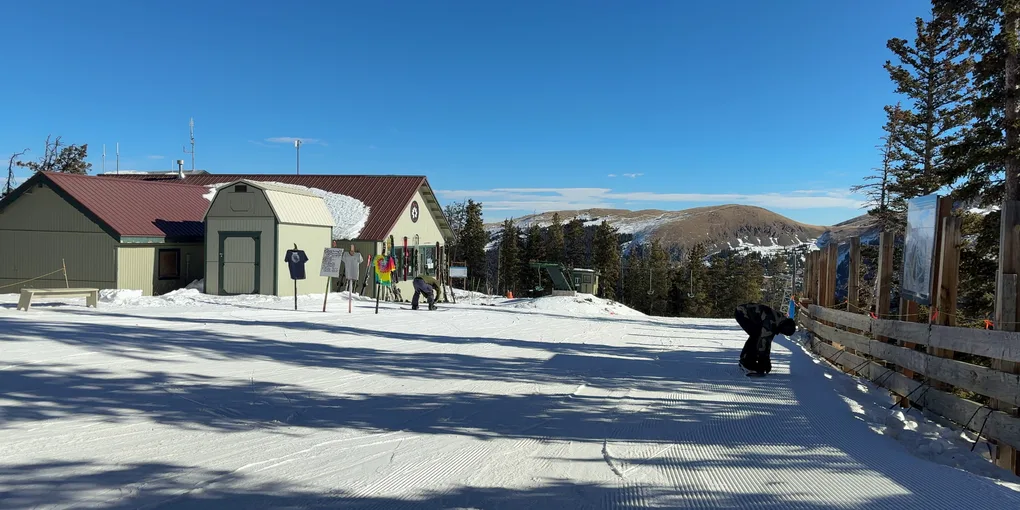
In the mountains, it is ski season. Northern New Mexico has Taos Ski Valley, Ski Santa Fe, Angel Fire Resort, Red River Ski Area, Sipapu, and Pajarito Mountain. Farther south, Ski Apache rises high above Ruidoso, while Ski Cloudcroft offers a much smaller ski area near Cloudcroft.
The surrounding mountain towns are worth visiting even if you do not ski. Taos, Santa Fe, Red River, Ruidoso, and Cloudcroft are especially beautiful after snowfall, while hot springs around Jemez Springs and Truth or Consequences are particularly appealing when the weather turns cold.
At lower elevations, winter is often sunny and relatively mild. White Sands National Park is much easier to explore without summer heat, and Las Cruces, the Organ Mountains, and Oliver Lee Memorial State Park can all have excellent hiking weather on sunny winter days.
Winter is also a good time to head farther south and east to Carlsbad Caverns National Park, Guadalupe Mountains, and Bottomless Lakes State Park, or west toward Silver City and City of Rocks State Park.
Wildlife can also be a reason to visit in winter. Bosque del Apache National Wildlife Refuge becomes one of the state’s standout destinations as huge numbers of migratory cranes and geese gather along the Rio Grande.
Snowstorms can temporarily affect highways across northern and central New Mexico, and mountain roads may require extra caution, but winter is one of the most underrated seasons for exploring the southern half of the state.
Best for: Skiing, snow scenery, White Sands, hot springs, Bosque del Apache, southern New Mexico, desert hiking
So When Should You Go?
There really isn’t a bad time to visit New Mexico. Each season shows a different side of the state, from snowy mountain towns in winter and desert wildflowers in spring to cool summer forests and golden cottonwoods in fall. Whenever you visit, you will find a beautiful landscape that feels completely different from the season before.