Lincoln County War: Billy the Kid and New Mexico’s Bloody Feud
Today, Lincoln, New Mexico is a quiet village stretching along the Rio Bonito, its old adobe looking almost unaltered from the late 1800s. It is difficult to imagine that this little valley was once the center of one of the most violent political and economic struggles in the American West.
The Lincoln County War was not a conventional war between organized armies. Instead, it was a struggle between two competing business factions for control of one of the largest counties in New Mexico Territory.
The conflict involved merchants, cattlemen, lawyers, sheriffs, hired guns, politicians, and eventually the United States Army. What began as a fight over stores, government contracts, and debt erupted into assassinations and open gun fights that consumed the entire town of Lincoln.
Caught in the middle of the fighting was a young ranch hand named Henry McCarty, better known as Billy the Kid. Although Billy would eventually become the most famous person associated with the Lincoln County War, the conflict was already developing before he entered the picture.
Lincoln in the 1870s
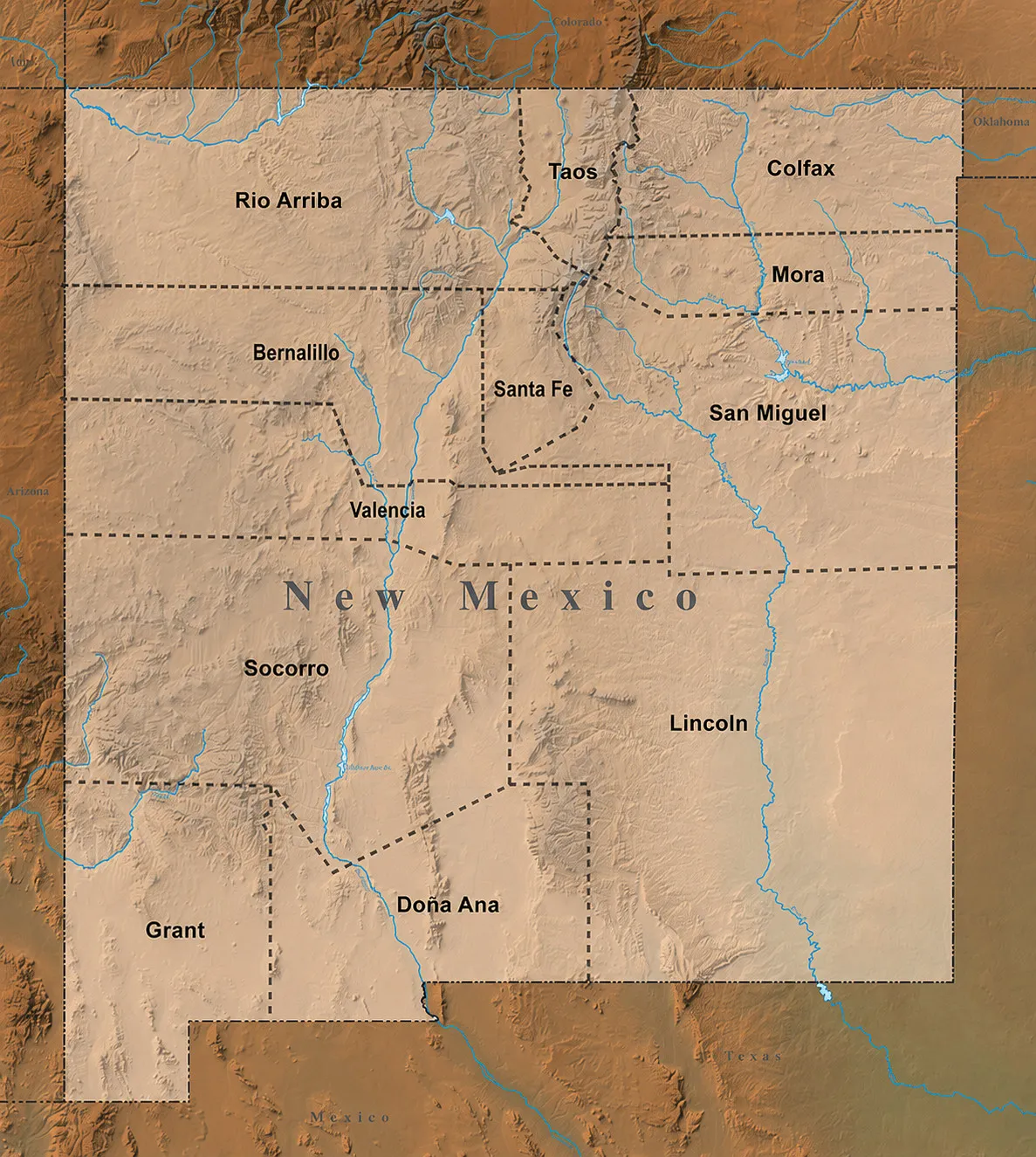
Lincoln County in the 1870s was enormous, covering much of southeastern New Mexico Territory. Settlements were scattered, transportation was difficult, and government institutions were weak. This made local economic power extremely important and one company in particular came to dominate Lincoln.
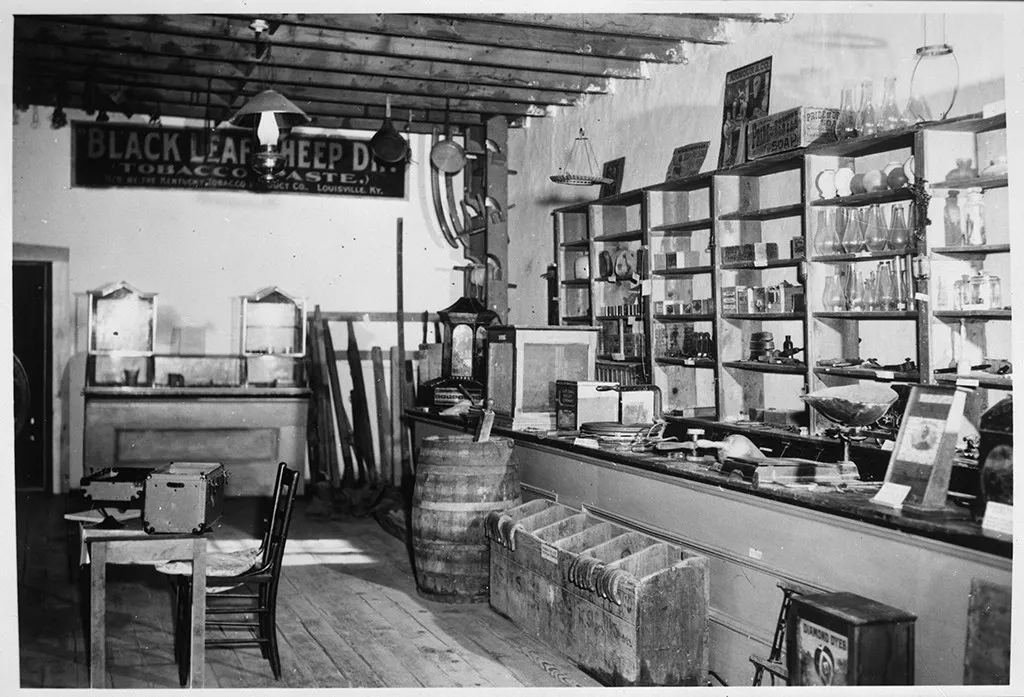
Irish immigrants Lawrence Murphy and James Dolan, along with business partner John Riley, operated a large general store known as “The House.” Their business sold everything settlers might need, from food and clothing to tools, guns, and ranching supplies.
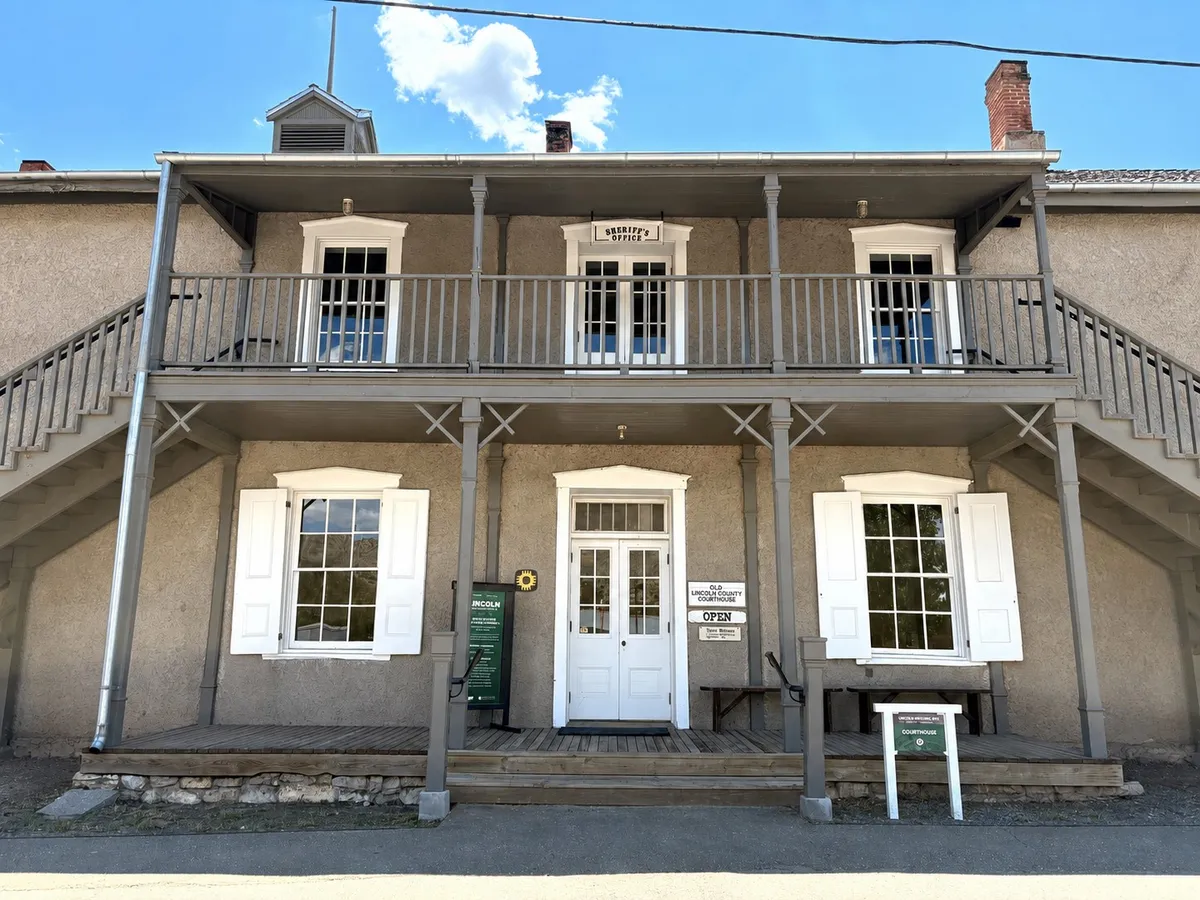
The Murphy-Dolan interests supplied nearby Fort Stanton, dominated the local cattle trade, extended credit to local residents, and maintained connections with powerful political figures in Santa Fe. Their allies also held important local offices.
For years, anyone hoping to do serious business in Lincoln County had no choice but to deal with their network. Or that was true until a competitor arrived.
A New Challenger Approaches
In 1876, a young Englishman named John Henry Tunstall came to New Mexico with ambitions of becoming a rancher and businessman.
Tunstall partnered with Lincoln attorney Alexander McSween and received backing from a powerful cattleman, John Chisum. Together, they represented a direct challenge to the Murphy-Dolan establishment.
Tunstall opened H.H. Tunstall & Company almost directly across the road from his competitors in Lincoln. He also established a cattle ranch and began attempting to win some of the lucrative business that flowed through the Murphy-Dolan network.
This was not two stores trying to undercut each other on butter. Both factions were connected to lawmen, political allies, and armed supporters.
Legal Blows
The dispute became especially dangerous because of Alexander McSween’s earlier dealings with the Murphy-Dolan firm.
Before partnering with Tunstall, McSween had handled legal matters involving the estate of Emil Fritz, Murphy’s former business partner. A fight developed over money from Fritz’s life insurance policy, with the Murphy-Dolan interests accusing McSween of improperly withholding funds belonging to the estate.
The dispute moved into court, where Dolan’s side obtained legal authority to seize property connected to McSween. Because McSween and Tunstall were now business partners, that legal fight threatened Tunstall’s store, ranch, cattle, and horses as well. This legal threat would ultimately set off the war.
Setting the Stage
The war is split between the Murphy-Dolan Faction and Tunstall-McSween Faction and their allies.
Murphy-Dolan Faction4 major figures
Lawrence Murphy
- Lawrence Murphy was an Irish immigrant, Civil War veteran, and the owner of The House.
- By the time Tunstall arrived, Murphy was suffering from poor health and withdrawing from daily operations.
James Dolan
- James Dolan was Murphy’s younger business partner.
- He became the more aggressive figure in the battle against Tunstall and McSween.
- Dolan had strong connections within Lincoln County.
Sheriff William Brady
- William Brady was Sheriff of Lincoln County and an ally of Murphy.
- His office gave the faction legal authority to arrest people and seize property.
Jesse Evans
- Jesse Evans led a gang of rustlers and gunmen closely associated with the Murphy-Dolan side.
- His men worked with Sheriff Brady during the conflict.
Tunstall-McSween Faction3 major figures
John Tunstall
- John Tunstall was a young English businessman who challenged the Murphy-Dolan establishment.
- He built a competing ranching and mercantile operation.
Alexander McSween
- Alexander McSween was a lawyer and Tunstall’s closest local partner.
- His legal disputes with Murphy-Dolan helped turn the rivalry into a crisis.
John Chisum
- John Chisum was one of the most powerful cattlemen in New Mexico Territory.
- He provided financial and political support to Tunstall.
The Murder of John Tunstall
On February 18, 1878, the legal feud between Murphy-Dolan and Tunstall-McSween escalated into violence.
A sheriff’s posse including members of Jesse Evans’ gang was gathered on orders of Sheriff William Brady. They would pursue Tunstall while attempting to seize livestock connected to the ongoing legal dispute between the rival businesses. Tunstall was riding with several of his employees when members of the posse caught up with him. Shots were fired and Tunstall was killed.
Exactly what occurred during the confrontation was disputed immediately. Tunstall’s enemies claimed that he had resisted lawful authority. His supporters saw the killing as an execution. A later federal investigation would conclude that Tunstall had been killed in cold blood.
Tunstall was buried in Lincoln behind his store. For the young men working for Tunstall, the dispute suddenly became personal. His former employees wanted his killers brought to justice. When they concluded that Sheriff Brady’s government would not do it, they decided to do it themselves.
The Regulators are Born
After Tunstall was killed, his supporters organized an armed posse known as the Lincoln County Regulators.
Contrary to how they are often depicted, the Regulators did not begin as an outlaw gang. They obtained warrants and were initially deputized to arrest the men accused of killing Tunstall. Conflicting territorial authorities would undermine their legal status, creating a bizarre situation in which both sides claimed to represent the law and regarded the other as criminals.
The Regulators6 major figures
Dick Brewer
- Richard Brewer was Tunstall’s ranch foreman and the Regulators’ first leader.
- He led the group’s early attempts to arrest the men accused of killing Tunstall.
- Brewer was killed during the conflict in April 1878.
Billy the Kid
- Billy the Kid, also known as William Bonney and Henry McCarty, was a young employee of Tunstall.
- He joined the Regulators after Tunstall’s murder but was not initially a leader.
- His later killings, courthouse escape, and death at the hands of Pat Garrett made him the most famous figure associated with the war.
Doc Scurlock
- Josiah Scurlock was an early member of the Regulators.
- He became one of the group’s leaders after Brewer’s death.
- Unlike many of the Regulators, Scurlock survived the Lincoln County War.
Frank McNab
- Frank McNab was one of the Regulators’ principal fighters.
- He became a leader of the group after Brewer’s death.
- McNab was killed by Murphy-Dolan allies during the conflict.
Charlie Bowdre
- Charlie Bowdre fought alongside Billy the Kid as a member of the Regulators.
- He remained associated with Billy after the Lincoln County War.
- Bowdre was killed by Pat Garrett’s posse in 1880.
George and Frank Coe
- George and Frank Coe were cousins and local ranchers who joined the Regulators.
- Both participated in several important encounters during the Lincoln County War.
- George Coe survived the conflict and later wrote about his experiences.
The Regulators began hunting members of the posse and, in early March, captured William Morton and Frank Baker. The prisoners were supposed to be returned to Lincoln, but on March 9 they were killed while in Regulator custody near Blackwater Creek. The Regulators claimed the men had tried to escape, but the circumstances were suspicious, and whatever legal legitimacy the group had started with began to erode.
Regulators Kill Sheriff Brady
Territorial officials soon challenged the Regulators’ authority. Governor Samuel Axtell backed the existing county government, leaving Sheriff Brady and his deputies as Lincoln County’s recognized law-enforcement force and placing the Regulators on the wrong side of the law. On April 1, 1878, several Regulators ambushed Brady and his deputies as they walked through Lincoln. Brady was killed, Deputy George Hindman was mortally wounded, and Billy the Kid was among the Regulators involved.
Days later, the Regulators encountered Andrew Roberts, a Murphy-Dolan associate they intended to arrest, at Blazer’s Mill. The arrest attempt erupted into a fierce gunfight. Despite being badly wounded, Roberts held off several Regulators and fatally shot Dick Brewer, their original leader. Roberts died from his own wounds shortly afterward, leaving the Regulators without a leader.
Killing and Counter-Killing
By spring 1878, Lincoln County had split into rival armed camps. After Sheriff Brady’s death, George Peppin, an ally of the Murphy-Dolan faction, became sheriff and assumed control of the county’s recognized law-enforcement forces.
After Brewer’s death, Frank McNab became one of the Regulators’ leaders, but on April 29 he was ambushed and killed by men aligned with Peppin and the Murphy-Dolan faction. Frank Coe was also captured and another Regulator was wounded.
The Regulators retaliated, and the conflict devolved into a cycle of ambushes, arrests, shootings, and revenge killings. By this point, the original business dispute had largely disappeared beneath the violence, with each death becoming justification for the next.
The Battle of Lincoln
The Lincoln County War reached its climax in July 1878, when Alexander McSween rallied a large group of supporters. On July 15, fighting broke out as the opposing faction surrounded McSween’s men, turning the town into a battlefield.
McSween and several Regulators barricaded themselves inside his adobe home while others occupied nearby buildings. For several days, the two sides exchanged gunfire across Lincoln as residents were caught in the middle. The confrontation became known as the Battle of Lincoln.
The Army Arrives
On July 19, Lt. Col. Nathan Dudley marched troops from nearby Fort Stanton into Lincoln against federal orders. They brought a Gatling gun with 2,000 rounds of ammunition and a 12-pound mountain howitzer, giving the Army overwhelming firepower compared with the civilians fighting in town.
Although Dudley claimed the Army was there to restore order, his troops positioned their weapons against McSween’s supporters and threatened to fire if they continued shooting. Many of McSween’s men abandoned their positions, leaving McSween, Billy the Kid, and a small group trapped inside the McSween home.
The Burning of the McSween House
Later that day, men from the Dolan-Peppin faction set the McSween house on fire. As the flames spread through the adobe building, the defenders were forced to choose between burning inside or attempting to escape through enemy gunfire.
Billy the Kid and several others escaped, but Alexander McSween was shot and killed outside the burning house along with several defenders. With Tunstall, Brady, Brewer, McNab, and McSween all dead, the Regulators scattered, and the Murphy-Dolan faction still standing, the war was effectively over.
The Aftermath
The Murphy-Dolan faction emerged victorious from the Battle of Lincoln, aided by the intervention of U.S. Army troops from nearby Fort Stanton. But the violence also brought unwanted federal attention to New Mexico. Accusations of corruption and misuse of political power led to a federal investigation, and President Rutherford B. Hayes replaced Governor Samuel Axtell with former general Lew Wallace in September 1878.
Wallace arrived with the task of restoring order and eventually issued an amnesty in an effort to end the violence. In 1879, Billy the Kid agreed to testify about killings connected to the conflict in exchange for favorable treatment, but the arrangement collapsed and he returned to outlaw life.
The Lincoln County War was ultimately a chaotic struggle of business rivalries, political power, disputed law enforcement, and deadly revenge. Amazingly, today you can walk through the places where it happened at the Lincoln Historic Site.