Place guide
Petroglyph National Monument
Volcanic rocks east of Albuquerque with over 24,000 historic rock carvings.
📍GPS: 35.13857, -106.711486
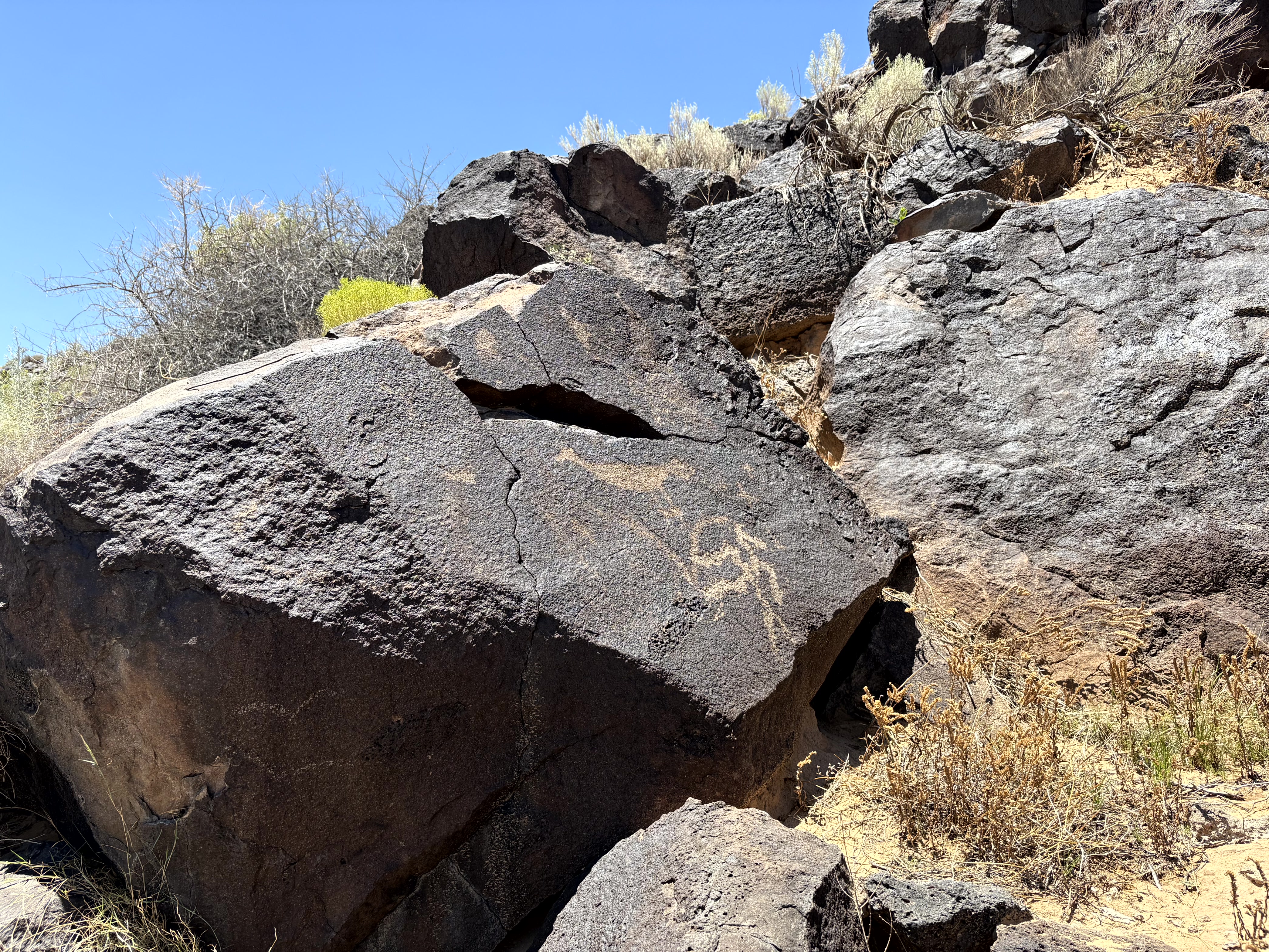
Petroglyph National Monument protects one of the largest petroglyph sites in the Americas, with over 24,000 images carved into the dark volcanic rock along Albuquerque’s West Mesa. It is one of the easiest national monuments to visit in New Mexico, but the monument is far more interesting than a quick roadside stop.
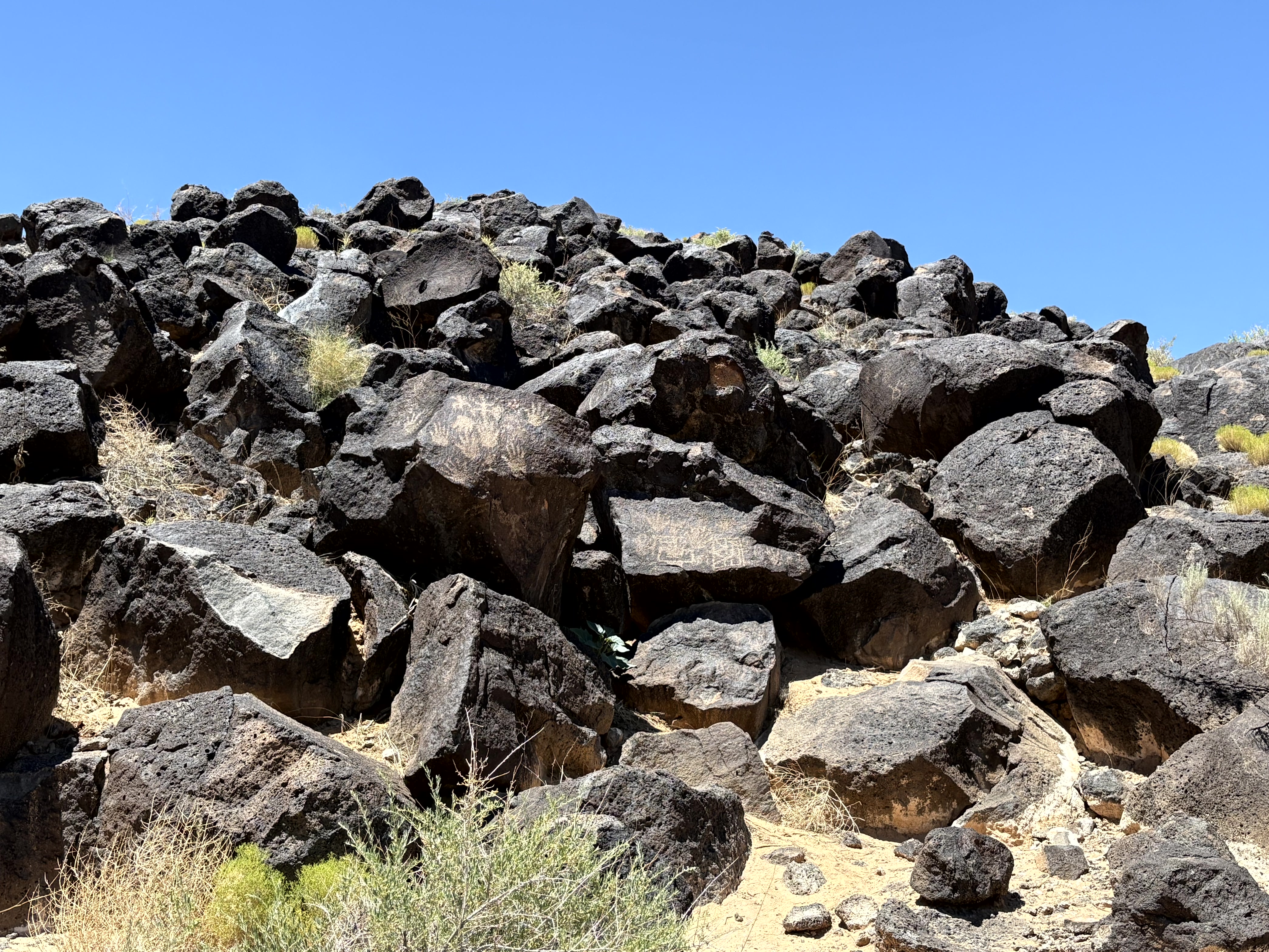
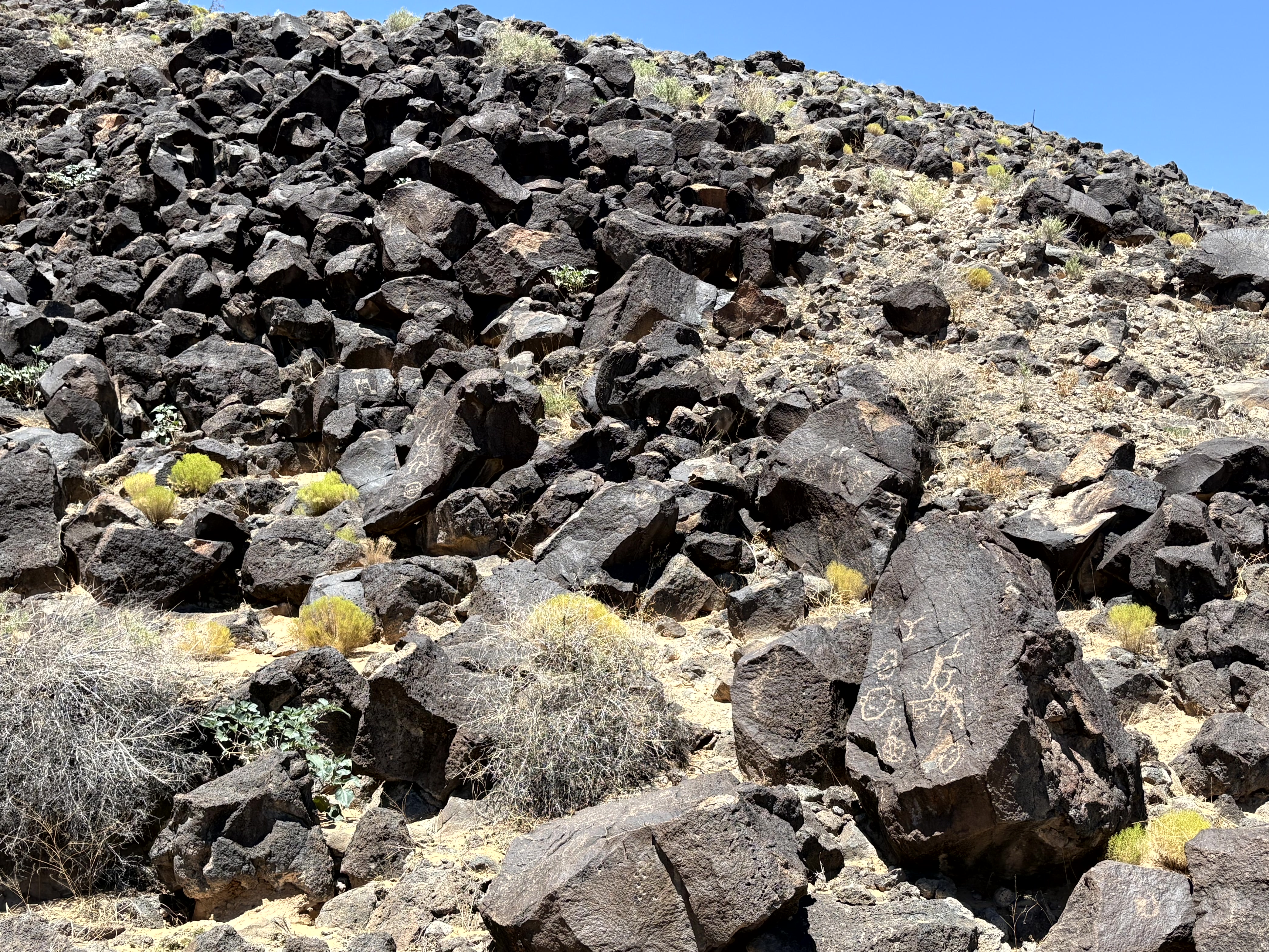
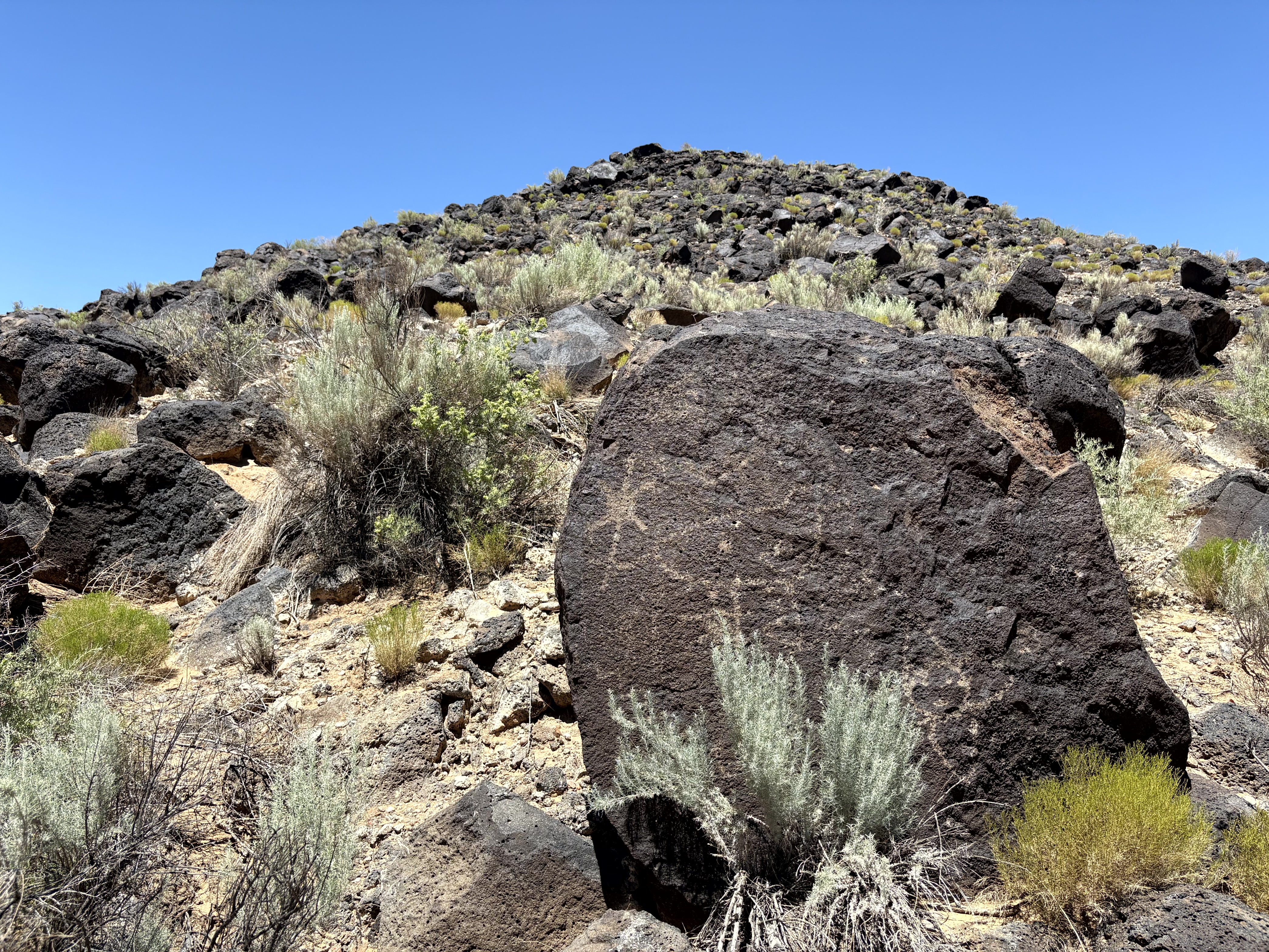
The main draw is the chance to walk along lava-rock escarpments covered with symbols, animals, human figures, spirals, crosses, and other designs carved by Native peoples and early Spanish settlers. The monument is spread across separate trail areas, so it is worth choosing the section that best matches how much time you have.
Don’t Miss
Piedras Marcadas Canyon
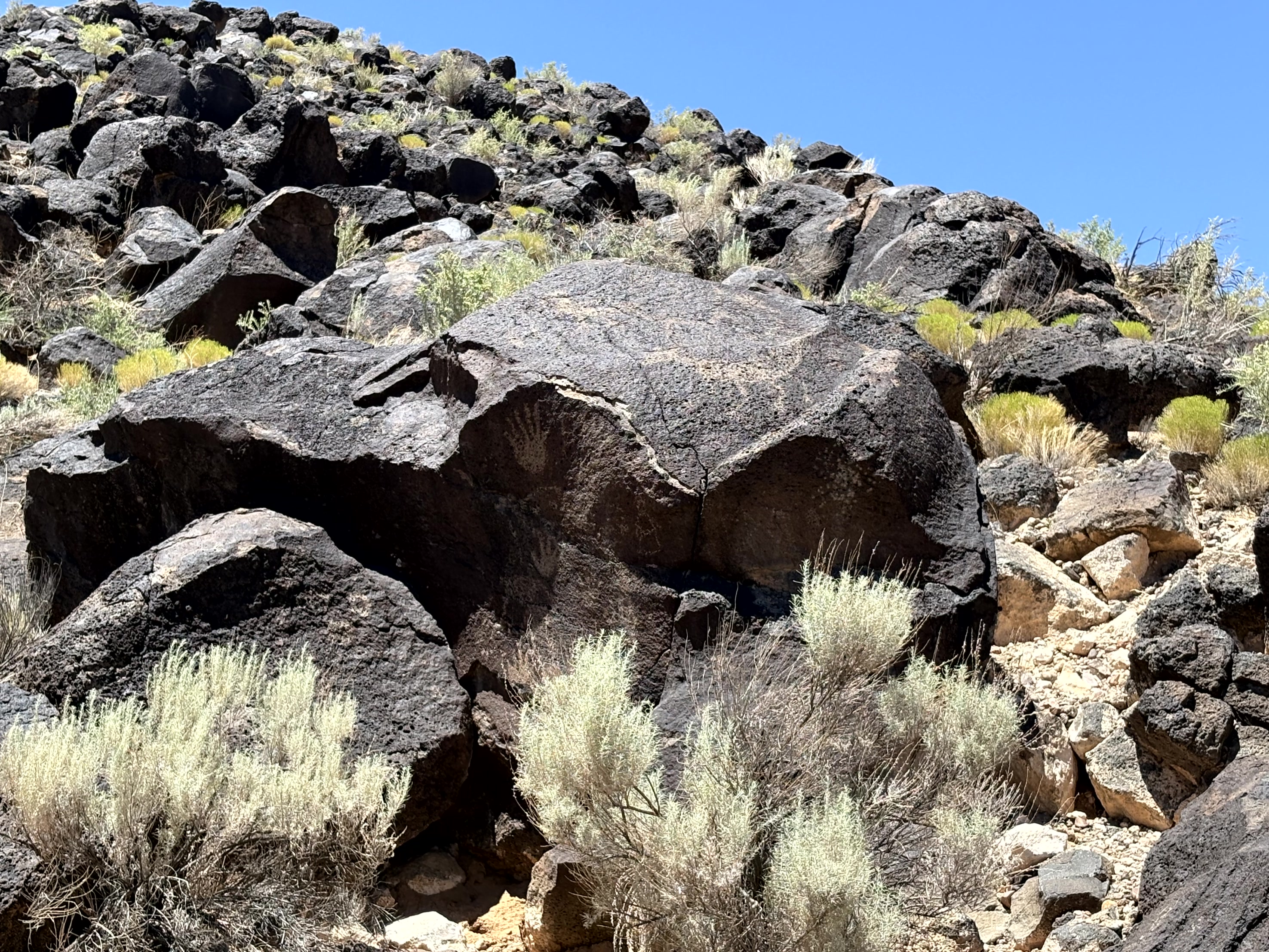
Piedras Marcadas Canyon is my personal favorite petroglyph trail. The main loop is a 1.8-mile round-trip walk along the bottom of the volcanic escarpment, where you can see up to 400 petroglyphs carved into the basalt boulders. The trail is considered easy to moderate, but it is unpaved and exposed. Visit in the morning or late afternoon for cooler temperatures and better light on the rocks. This trail is also about a mile from the visitor center and can be walked to if you prefer.
Boca Negra Canyon
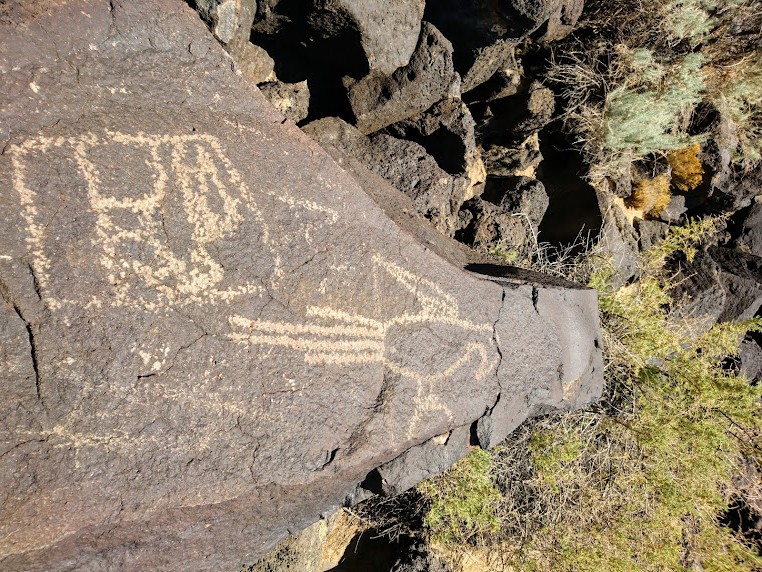
Boca Negra Canyon is the monument’s most developed and easiest-to-visit petroglyph area. It has restrooms, shade, a drinking fountain, and three short self-guided trails: Mesa Point, Macaw, and Cliff Base. This is the best choice if you only have about an hour or want quick access to petroglyphs. Around 100 petroglyphs can be seen here, including the well-known macaw petroglyph along Macaw Trail. The trails are short, but they are not all flat: Mesa Point is more strenuous, while Macaw and Cliff Base are moderate.
Rinconada Canyon
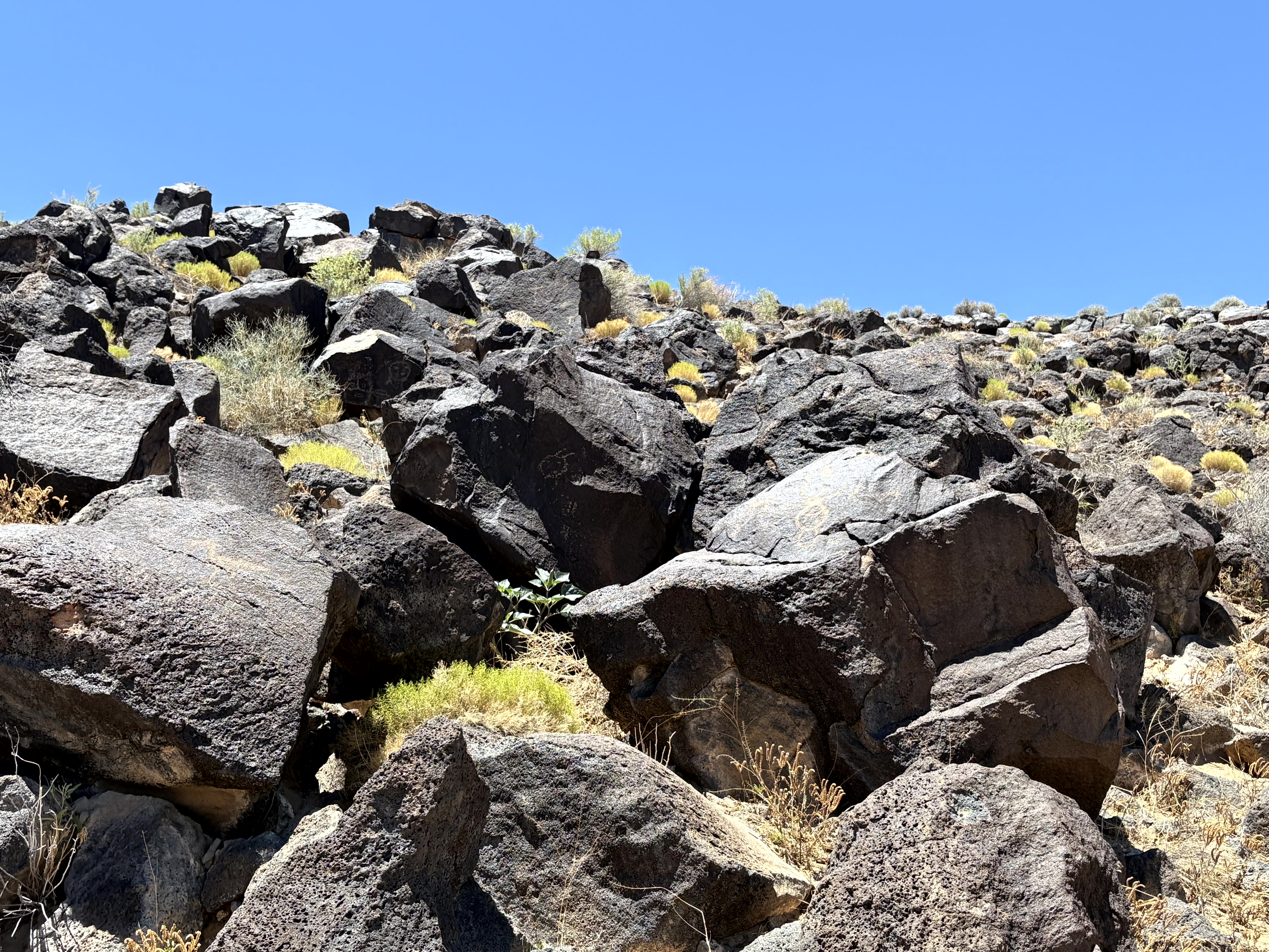
Rinconada Canyon is a better choice if you want a longer, quieter walk through the monument. The 2.2-mile round-trip trail follows the northern volcanic escarpment, passing sandy stretches, basalt boulders, desert vegetation, and views of up to 300 petroglyphs along the canyon wall. The trail is generally easy to moderate.
The Volcanoes
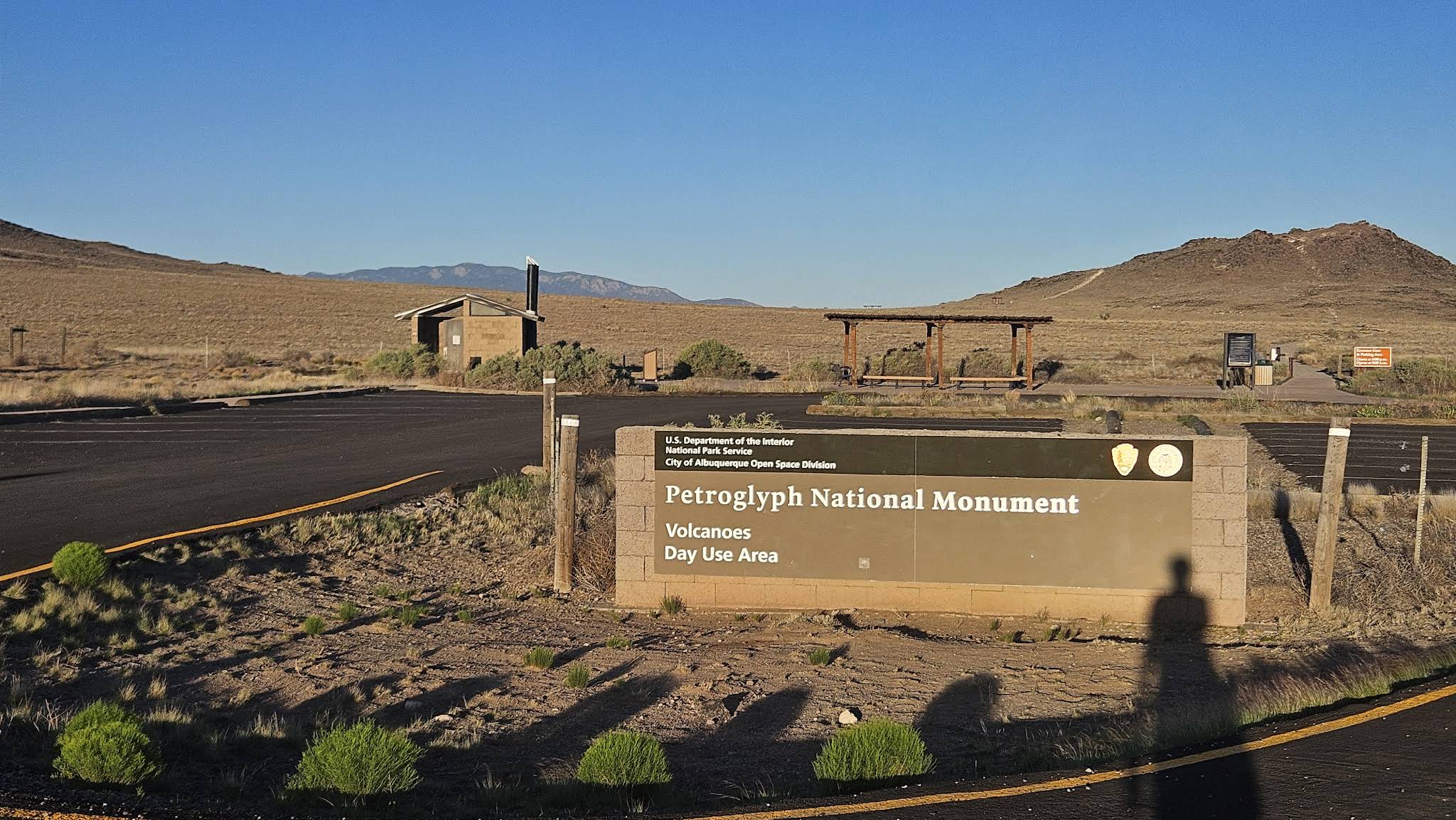
The Volcanoes Day Use Area does not have petroglyph viewing, but it is still a cool part of the monument. The area protects several volcanic cones, including the “Three Sisters,” whose lava helped create the basalt escarpment where the monument’s petroglyphs were carved. The trails are easy to see in about 1–2 hours and offer wide views of Albuquerque, the Sandias, and the Rio Grande Valley.
Visiting Respectfully
Petroglyph National Monument is not just an outdoor art site. The carvings are culturally important to Pueblo communities today. Stay on marked trails and do not touch or climb on the petroglyph rocks. They can be damaged quickly by oils from hands.
Know Before You Go
Petroglyph National Monument is spread out, and the main visitor center does not have a petroglyph trail directly behind it. You will usually drive from the visitor center to one of the separate trailheads. Boca Negra is best for a short visit. Rinconada and Piedras Marcadas are better if you want a longer walk and a quieter experience. There is very little shade, so visit early in the day during warm months, bring water, and wear good shoes.
When To Visit
Petroglyph National Monument is open year-round, but the best time to visit is in the spring or fall when temperatures are cooler. Summer can be very hot, and winter can bring cold winds and occasional snow.
How Long To Spend
Most visitors spend one to two hours exploring one of the petroglyph-viewing trails. You can stretch the visit into a full day by going to multiple trailheads, but the monument does not require more than a day. Seeing one trail area will give you the general idea. Visiting more is worth it if you have more time or really want to see more petroglyphs. The Volcanoes area is a good choice if you want to see the volcanic landscape without walking far.
Nearby places
Rio Grande Nature Center State Park
A peaceful bosque refuge with cottonwood trails, river access, ponds, and bird watching.
Albuquerque
New Mexico's largest city, known for the International Balloon Fiesta, historic Route 66, and the Sandia Mountains.
Sandia Pueblo
A Tiwa-speaking pueblo just north of Albuquerque operating Sandia resort & casino.