Place guide
Smokey The Bear Historical Park
The burial site of the real Smokey Bear, the orphaned cub rescued from a 1950 Lincoln National Forest fire.
📍GPS: 33.545847, -105.573874
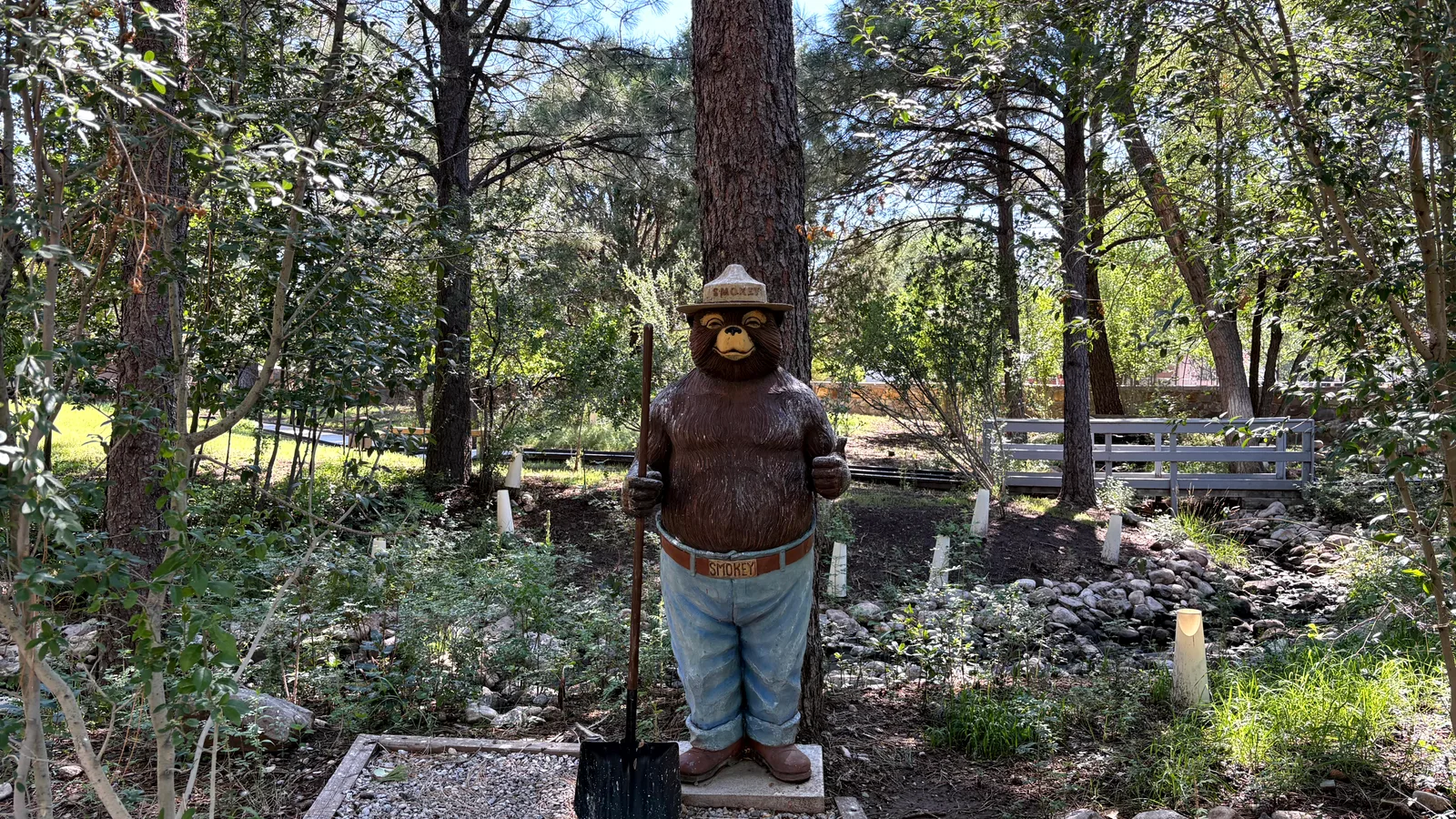
Smokey Bear Historical Park in Capitan preserves the story of one of the most recognizable symbols in American history — and the real New Mexican black bear that brought him to life.
The Smokey Bear wildfire-prevention campaign was created in 1944, but six years later firefighters battling the Capitan Gap Fire discovered an injured black bear cub clinging to a burned tree in the Capitan Mountains. The cub survived, was named Smokey, and became the living symbol of the national campaign.
Today, the small park in downtown Capitan includes a museum, gardens, memorials, and Smokey Bear’s final resting place.
The Real Smokey Bear
In May 1950, several wildfires burned through the Capitan Mountains. During the Capitan Gap Fire, firefighters discovered a badly burned bear cub clinging to a charred tree.
The cub, briefly nicknamed “Hotfoot Teddy”, had burns on his paws and legs. He was taken to Santa Fe for treatment, where veterinarian Ed Smith cared for his injuries. Photographs of the recovering cub quickly attracted national attention.
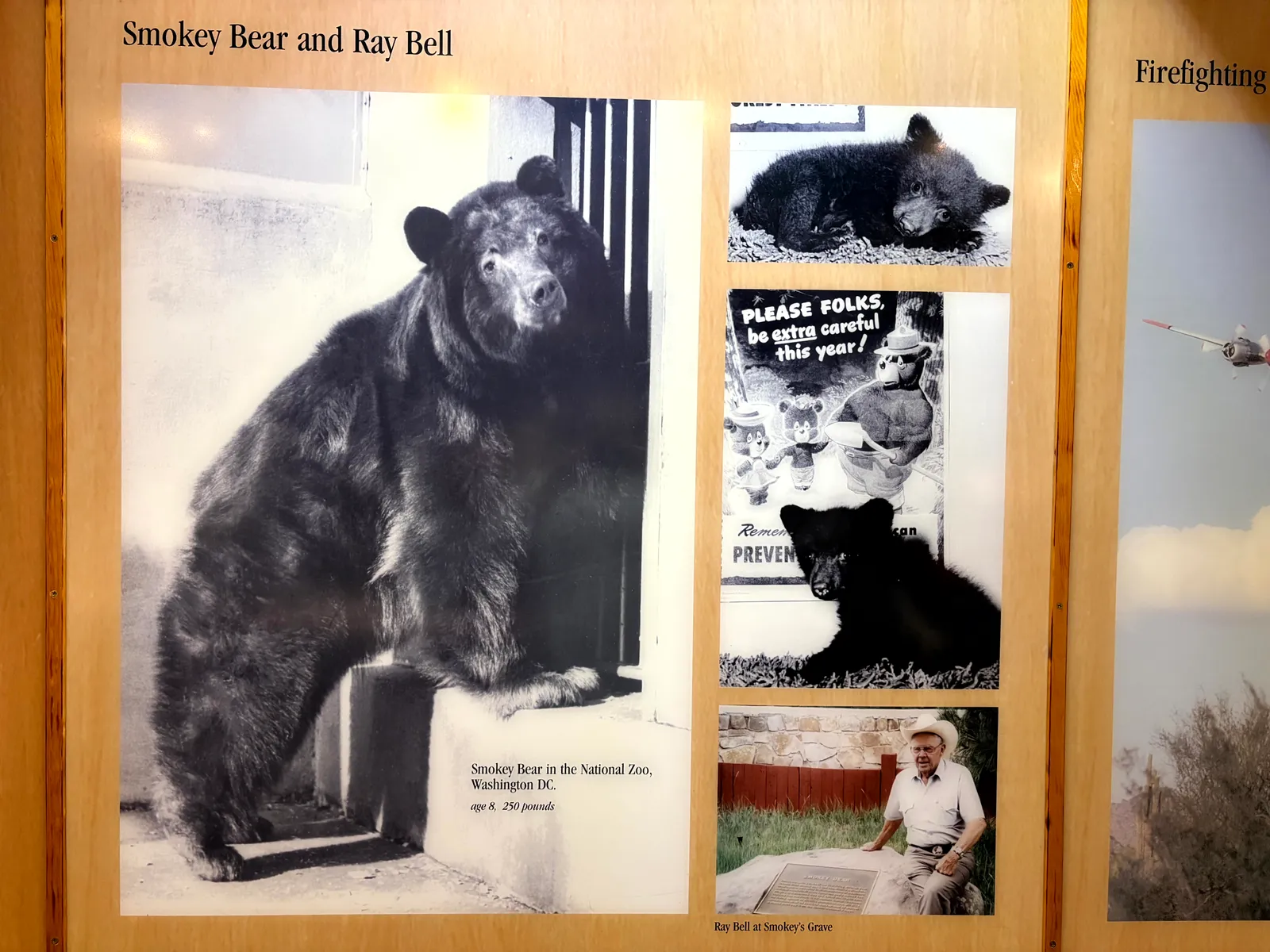
He was eventually renamed Smokey Bear after the already-famous wildfire prevention character and sent to the National Zoo in Washington, D.C., where he lived for 26 years as the campaign’s living symbol. Smokey died in 1976 and was returned to his home in Capitan, where he was buried at the newly established Smokey Bear Historical Park.
Exploring Smokey Bear Historical Park
The park is easy to see, covering a small museum, garden, and memorial.
The main attractions are:
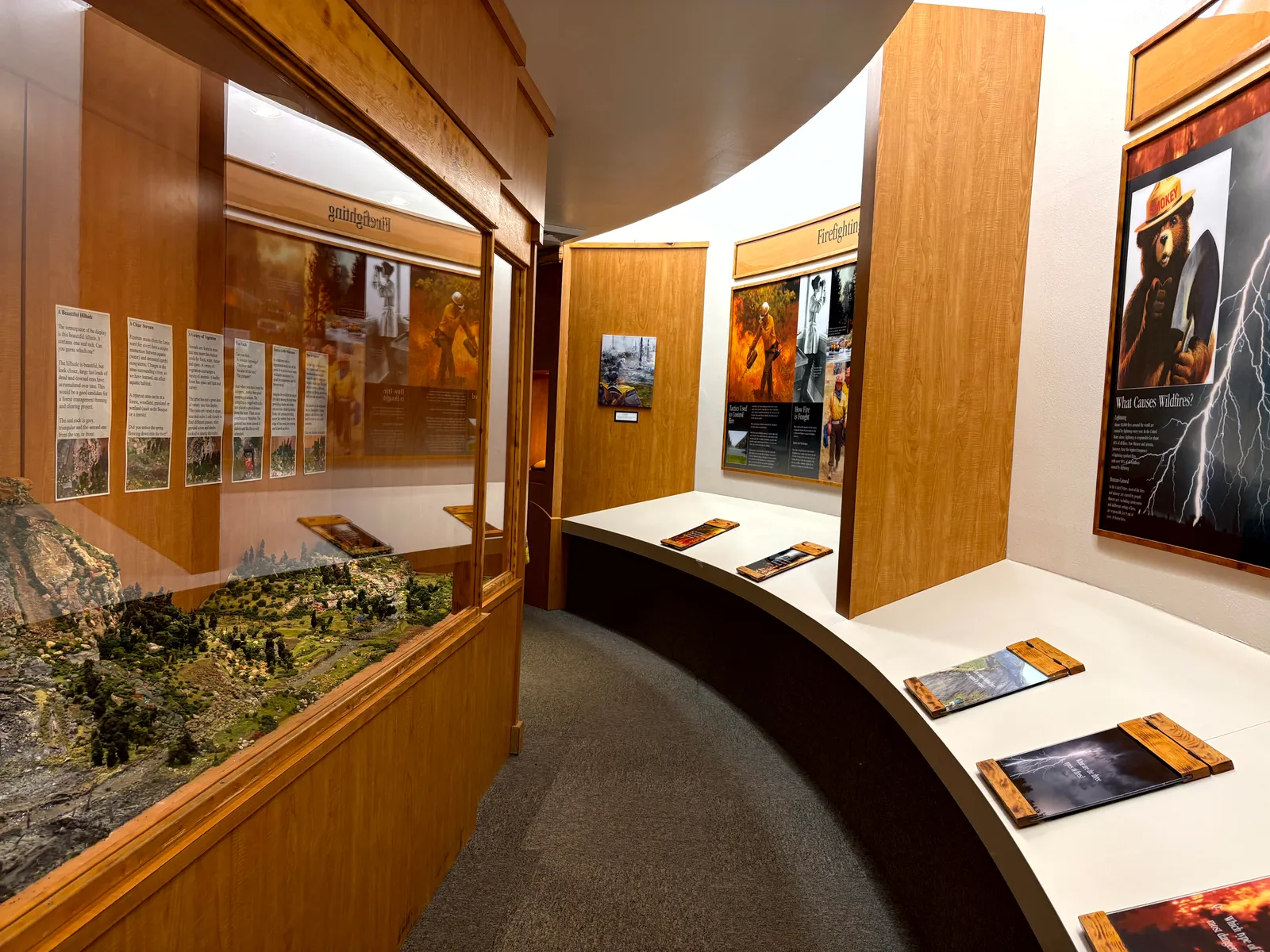
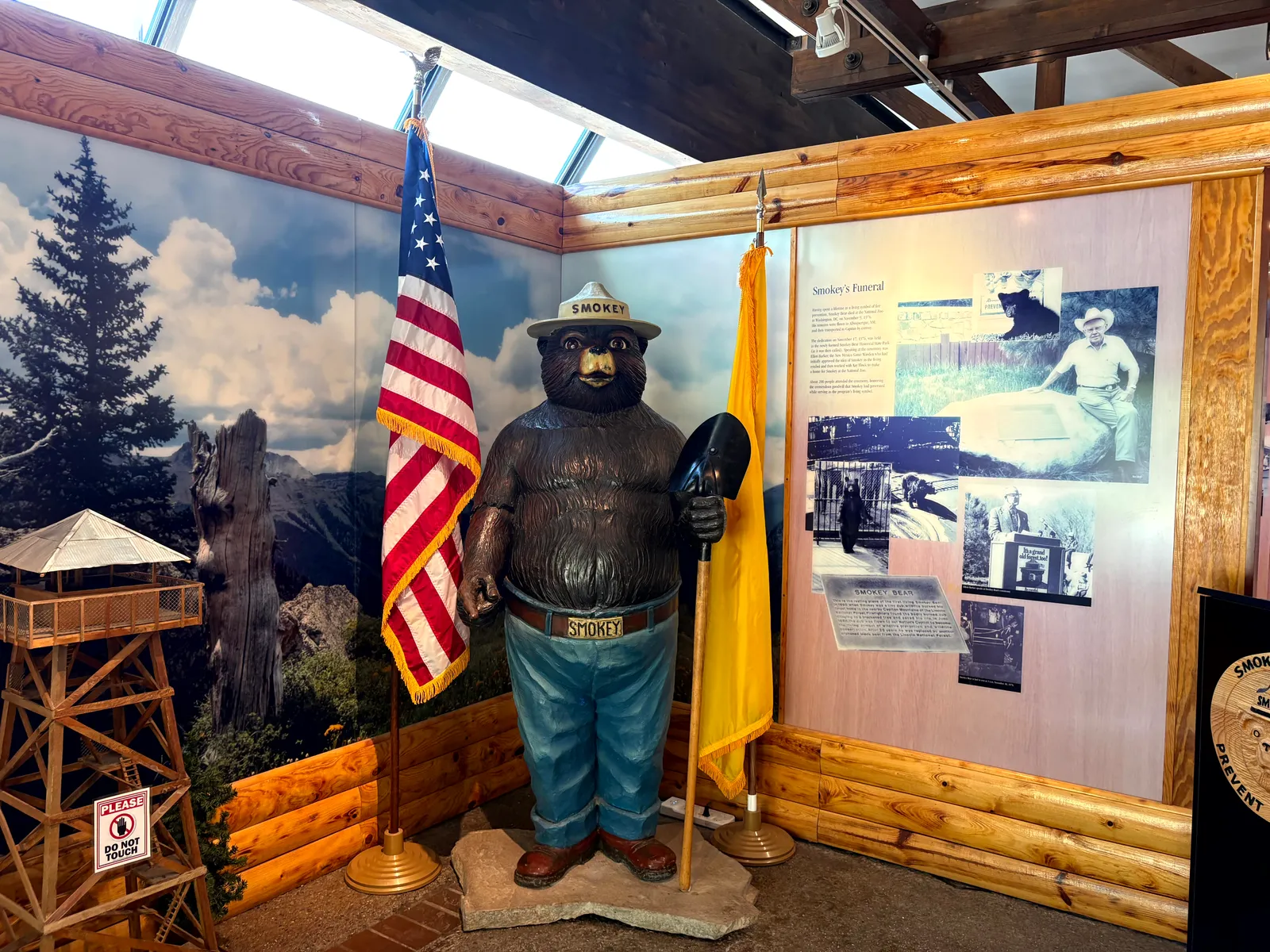
- Smokey Bear Museum — Exhibits cover Smokey’s life, the history of the wildfire-prevention campaign, forest science, and a small theater showing a film about forest management.
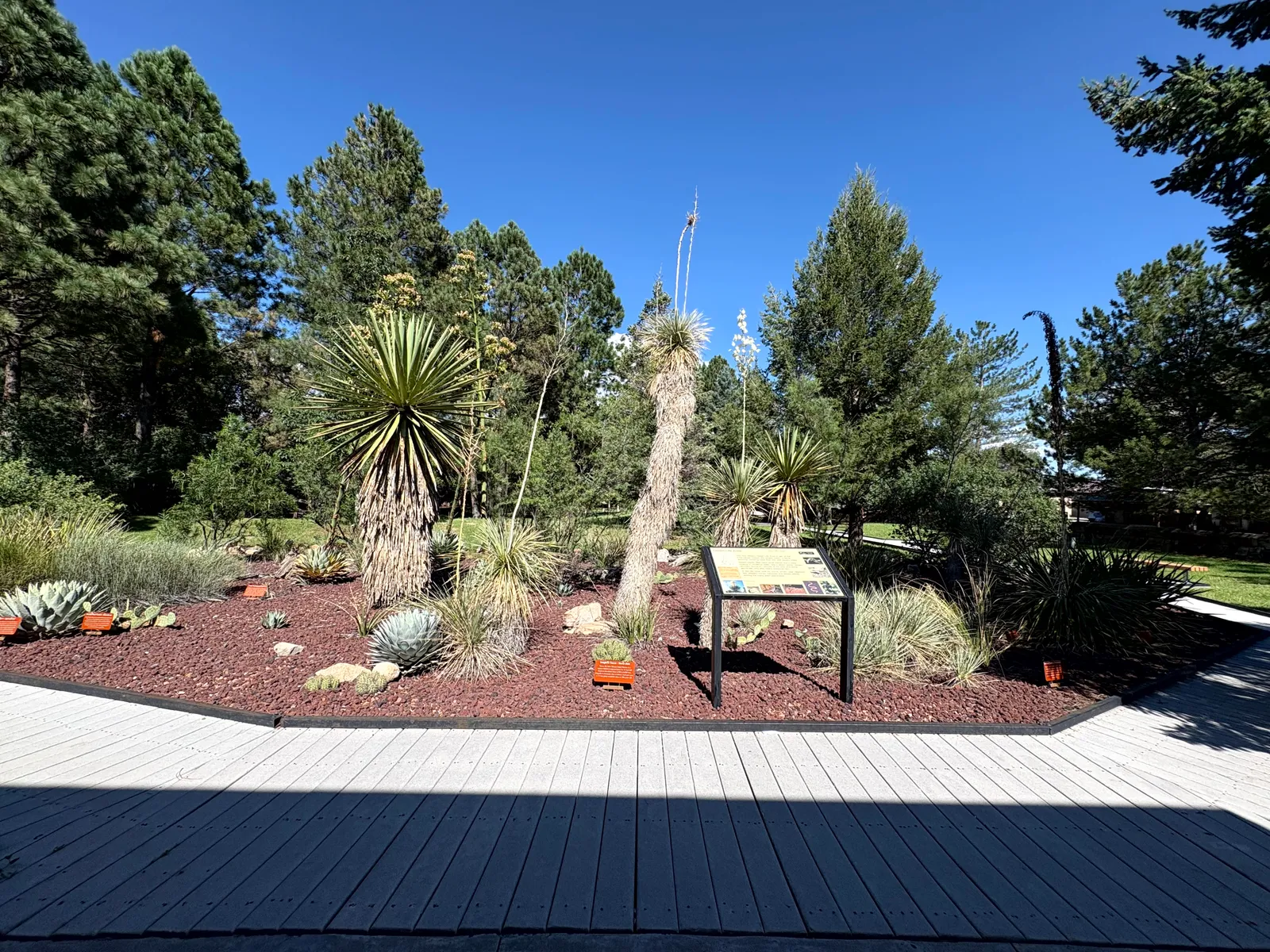
- Gardens — The outdoor portion of the park includes exhibits and plantings representing different vegetation zones found throughout New Mexico.
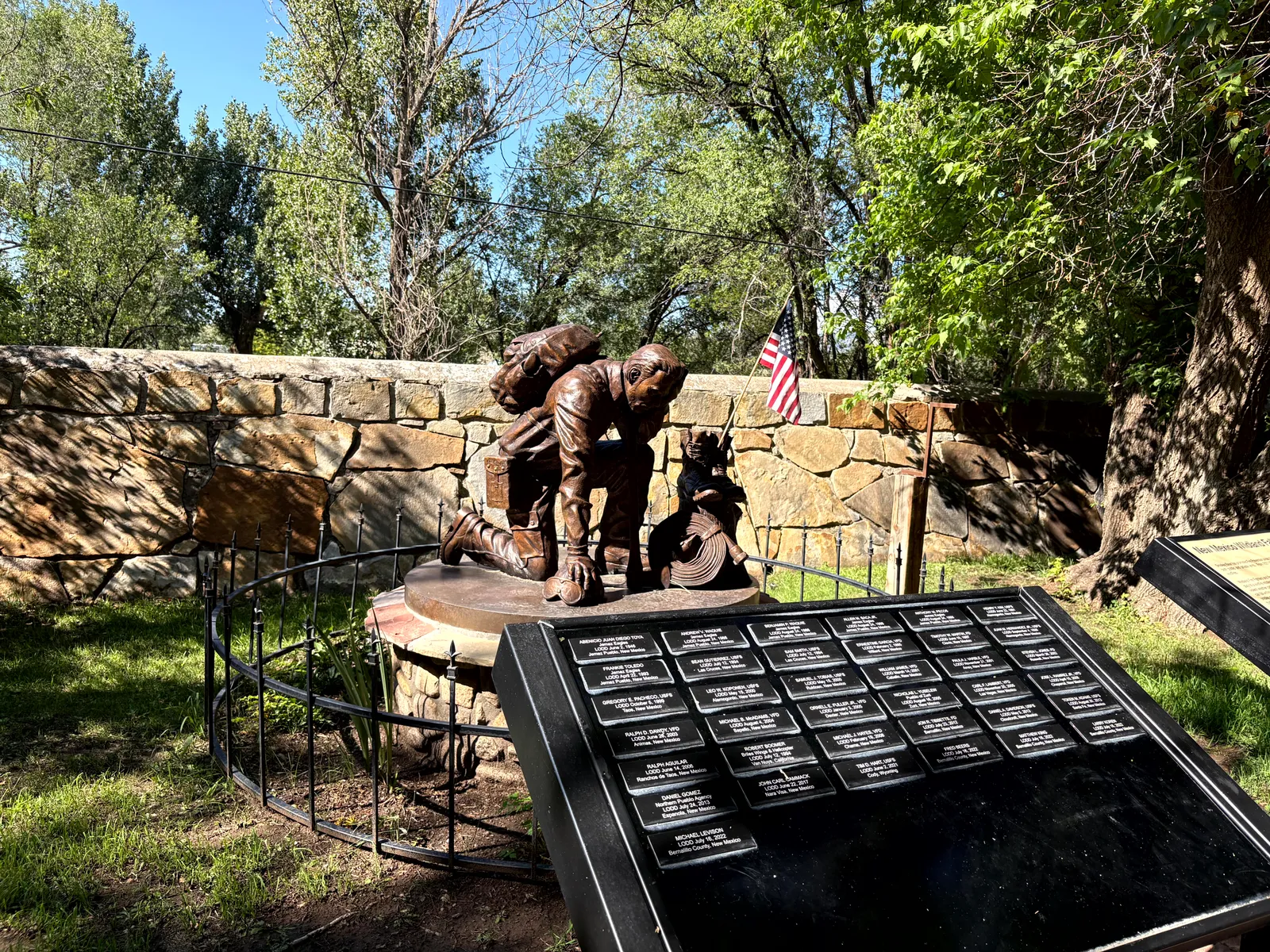
- New Mexico Wildland Fallen Firefighter Memorial — A bronze memorial honors more than 30 firefighters who died fighting fires in New Mexico.
- Smokey Bear’s Grave — The real Smokey Bear is buried beneath a stone marker in the park’s gardens, making Capitan his birthplace and final resting place.
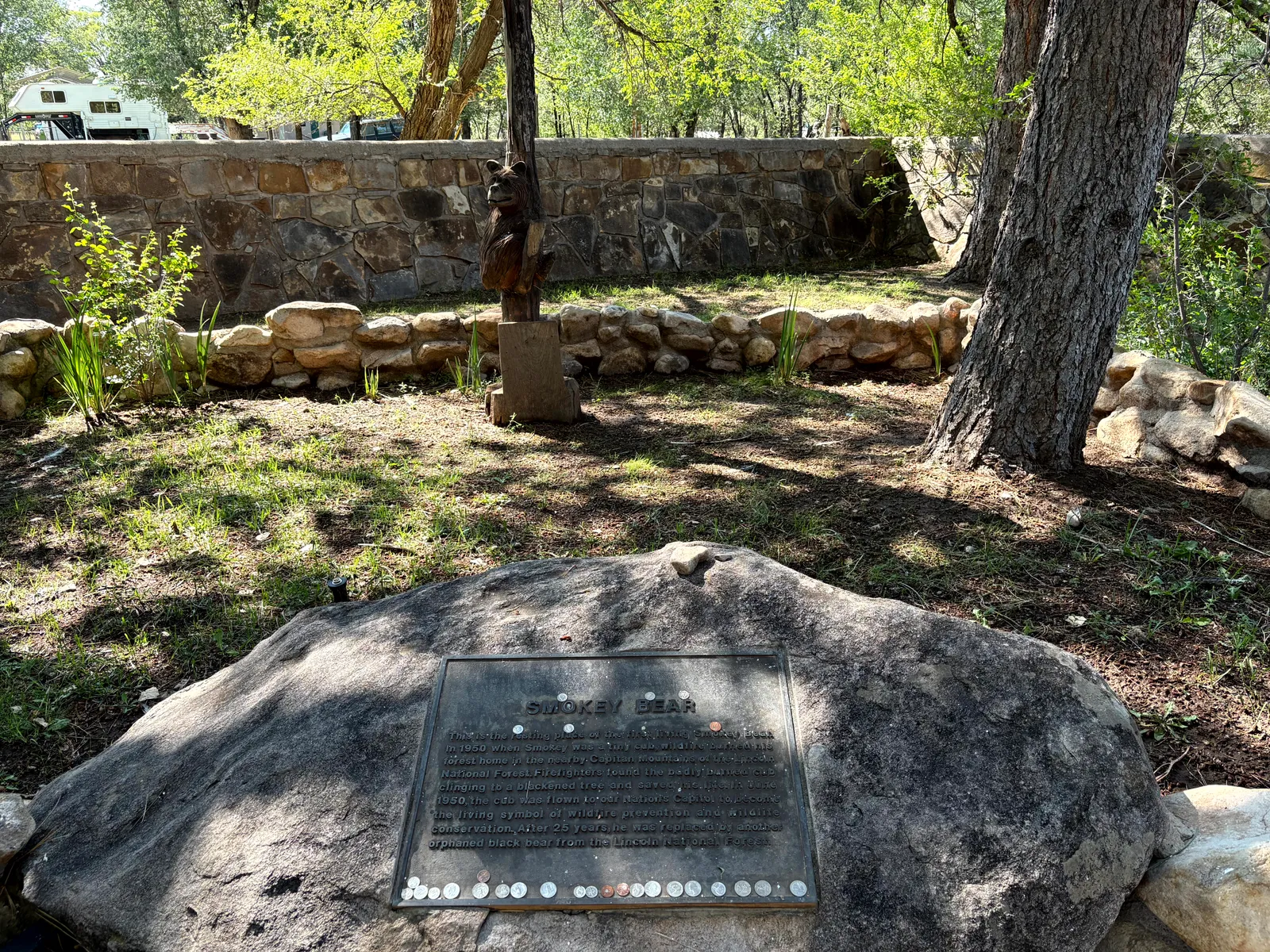
Smokey Bear is often assumed to be entirely fictional and he was fictional when the campaign began. The Smokey buried here was a real bear, however, who spent his life representing that campaign.
An Emotional Experience
I’m not going to lie — this Park is a tear jerker.
The story of Smokey, the message of forest preservation, and the memorial to fallen firefighters make you feel a sense of reverence for both our land and the people who’ve died protecting it. When you stand in front of Smokey’s grave, it’s so humble and sweet that it’s hard not to shed a tear. The park is a wonderful tribute to an American icon and a celebration of hope born from tragedy.
That could be just me, though. I don’t think the park is set up to trigger tears, I just found it very moving 😭😭😭.
How Long Should You Spend at Smokey Bear Historical Park?
Plan on spending around 30 minutes to an hour at Smokey Bear Historical Park.
The museum is small, and the outdoor grounds do not take long to walk, but there is enough here to make it more than a quick roadside photo stop. It also fits perfectly into a day exploring the area’s historic sites. Fort Stanton Historic Site and Lincoln Historic Site are both nearby, making it easy to visit all three in the same day. And remember, ‘Only YOU can prevent wildfires’!
Nearby places
Fort Stanton Historic Site
Historic Site preserving a former U.S. Army post with more than 150 years of military, medical, and frontier history.
Fort Stanton Cave
A vast cave system famous for its 13-mile-long Snowy River passage.
Ruidoso
A cool mountain escape in the Sacramento Mountains known for skiing, horse racing, and outdoor adventure.