Place guide
San Andres National Wildlife Refuge
A desert refuge within White Sands Missile Range where desert bighorn sheep came back from a population of just one known ewe.
📍GPS: 32.715721, -106.545482
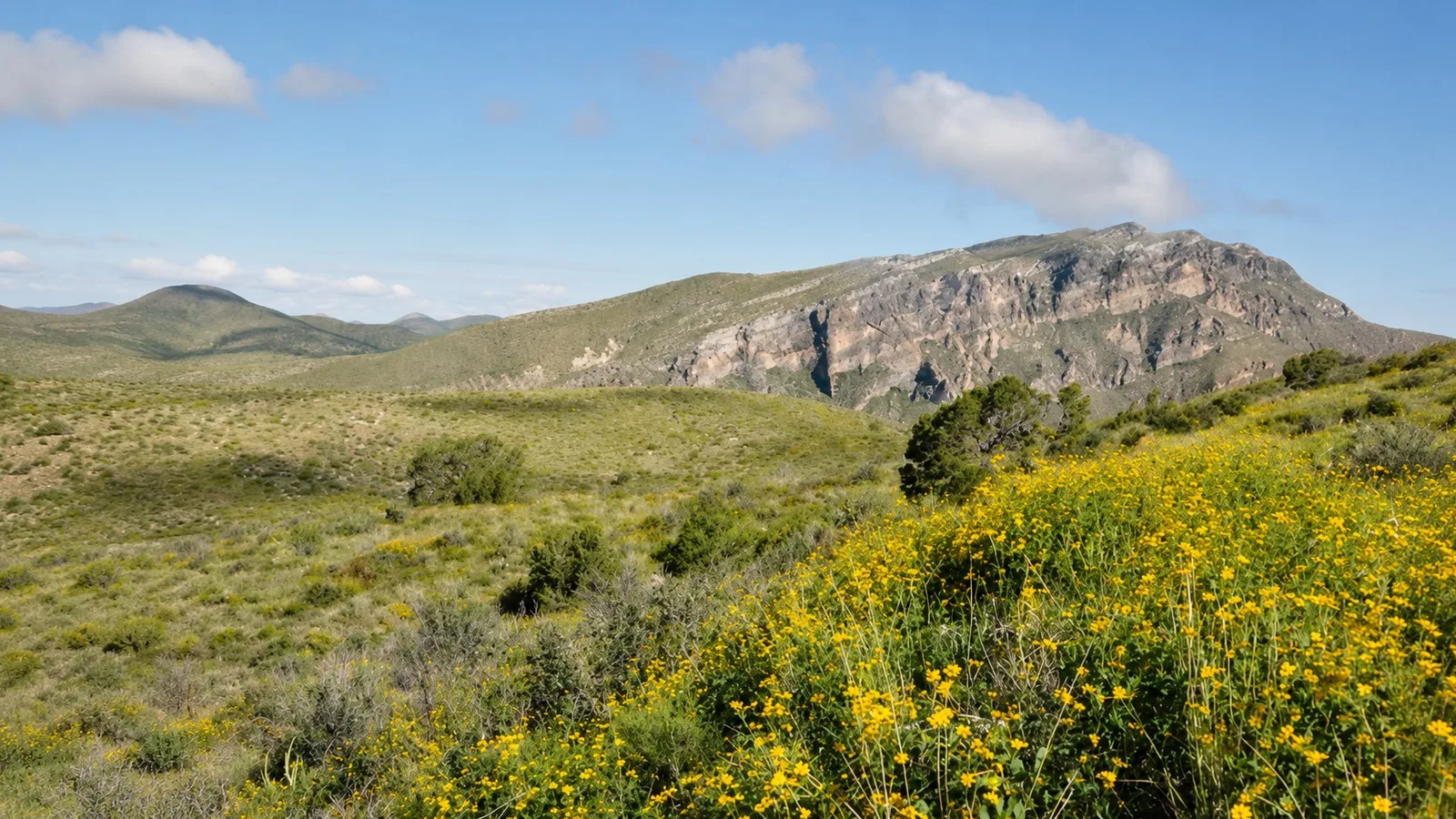
San Andres National Wildlife Refuge is one of New Mexico’s strangest protected areas: a 57,000-acre wildlife refuge entirely inside White Sands Missile Range.
Created to protect desert bighorn sheep, the refuge covers a rugged section of the southern San Andres Mountains between the Tularosa Basin and Jornada del Muerto. It is a landscape of steep mountains, desert grasslands, rocky canyons, hidden springs, abandoned mines, bighorn sheep, African oryx, and a few stories from New Mexico’s frontier past.
Unfortunately, you cannot visit it.
Because the refuge is surrounded by an active military testing range, normal public access is prohibited. That isolation, however, has also helped make San Andres one of the most undisturbed mountain environments in southern New Mexico.
The Desert Bighorn Comeback
San Andres National Wildlife Refuge was established in 1941 to protect one of New Mexico’s few remaining populations of desert bighorn sheep.
The first wildlife officer assigned to the refuge reportedly spent months searching the mountains before finally locating the small herd believed to be living there. Protection initially worked. By around 1950, the population had climbed to roughly 140 sheep. Then a drought cut the herd dramatically during the 1950s, and in 1978 wildlife managers discovered scabies among the sheep. The disease, caused by mites, killed almost all of the remaining sheep. By 1997, only one known ewe remained.
Wildlife managers eventually determined that the mountains could support sheep again. New animals were brought into the San Andres beginning in the early 2000s, including 51 desert bighorn released in 2002. The herd recovered, desert bighorn were eventually removed from New Mexico’s endangered species list, and today the San Andres Mountains once again support a substantial population.
It is one of the most successful wildlife comeback stories in New Mexico!
African Antelope in New Mexico?
Bighorn sheep are not the only large animals wandering these mountains.
There are also a substantial number of oryx. The large African antelope were introduced to the White Sands area in 1969 as a game species. Oryx are extremely well adapted to dry environments. They can get much of the moisture they need from plants, travel long distances, and an adult can weigh several hundred pounds. With few local predators capable of bringing down a healthy adult, their population expanded rapidly across White Sands Missile Range.
That range includes Trinity Site, where the world’s first atomic bomb was detonated in 1945. Oryx wandering through are sometimes called “radioactive” or “atomic” oryx. Residual radiation is still measurable around Trinity Site, but present-day levels are low enough that the oryx are not considered dangerously radioactive. Yum!
Eventually they reached the wildlife refuge as well, forcing native desert bighorn to compete with a large African antelope. To keep numbers in check, wildlife managers hold regulated hunts, including special hunts on White Sands Missile Range.
A Mountain Wilderness Behind the Fence
The refuge protects about 57,215 acres of the southern San Andres Mountains.
Lower elevations of the mountains are classic Chihuahuan Desert, with yucca, sotol, ocotillo, cactus, desert willow, Apache plume, and stretches of desert grass. Higher in the mountains, the landscape changes into pinyon and juniper woodland. The most important places are the small springs hidden inside the canyons. In an otherwise extremely dry range, these patches of water create pockets of green vegetation used by wildlife. Along with bighorn and oryx, the refuge supports mule deer, mountain lions, bobcats, gray foxes, javelina, birds, and even black bears.
Before the Missile Range
Before White Sands Missile Range, the San Andres Mountains were used by Native peoples, later became part of Apache country, and drew ranchers, miners, and outlaws. San Andres National Wildlife Refuge was established in 1941, just before the surrounding land became White Sands Missile Range in 1945, effectively closing the area off from ordinary public access.
Visiting San Andres National Wildlife Refuge
San Andres National Wildlife Refuge is not open to the public.
Access is controlled through White Sands Missile Range for safety and security reasons. Do not attempt to drive to the refuge. Roads leading into the area pass through military-controlled land and checkpoints.
San Andres is a hidden piece of New Mexico geography — a large mountain wilderness that holds lots of cool wildlife but cannot be accessed by the public.
Nearby places
White Sands National Park
The world's largest gypsum dune field, creating an otherworldly landscape of white rolling dunes.
Chihuahua Desert Nature Park
A southern New Mexico nature area offering desert scenery, hiking, and opportunities to observe regional wildlife.
Las Cruces
Southern New Mexico's largest city, known for its Organ Mountain backdrop, rich history, and agriculture.