Place guide
Many Pueblitos
A cluster of historic Navajo pueblitos scattered across the rugged mesas and canyons of North West New Mexico.
📍GPS: 36.652521, -107.541544
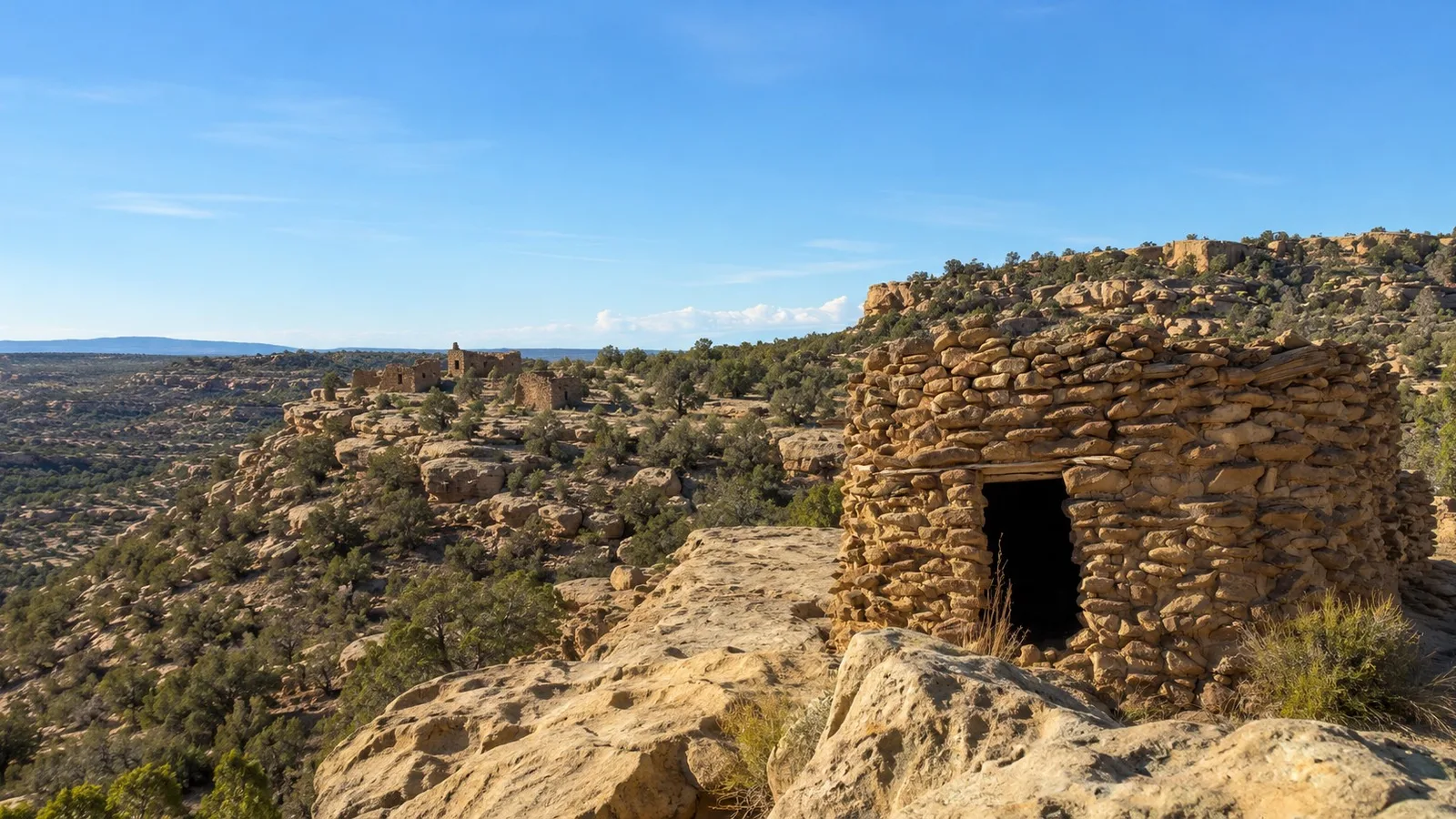
Dozens of small stone ruins known as pueblitos are scattered across the remote canyons and mesas of northwestern New Mexico.
Most were built by the Navajo during the late 1600s and 1700s, often in places that were difficult to reach or easy to defend. Some sit on the edges of cliffs and mesas, while others were built directly on top of enormous sandstone boulders. Around 40 pueblitos and related archaeological sites have been documented in the country east and southeast of Aztec.
History
The pueblitos were built during a turbulent period in the history of northwestern New Mexico.
Following the Pueblo Revolt of 1680 and the Spanish reconquest beginning in 1692, some Pueblo people moved into areas occupied by Navajo communities. At the same time, conflict with Spanish, Ute, and Comanche groups made defense increasingly important.The stone pueblitos appeared during this period of cultural mixing and conflict.
Early archaeologists sometimes believed they had been built mainly by Pueblo refugees, but later research showed that most were constructed by the Navajo. Their architecture often combined Navajo traditions with building techniques also seen in Pueblo and Spanish settlements. Many pueblitos were occupied for only a short period before being abandoned during the 1700s.
The Pueblitos
No two pueblitos are alike.
Some are a single stone room, while others contained multiple stories, towers, hogans, storage areas, fireplaces, and defensive walls.
The better-known sites are:
- Crow Canyon Pueblito
- Frances Canyon Pueblito
- Hooded Fireplace Pueblito
- Largo School Pueblito
- Simon Canyon Pueblito
- Split Rock Pueblito
- Tapacito Pueblito
Frances Canyon Pueblito is one of the largest, once containing around 40 rooms and a multi-story tower. Simon Canyon Pueblito is almost the opposite: a single room perched on top of a roughly 20-foot sandstone boulder. Split Rock Pueblito contains four rooms built above a massive crack in a boulder, while Hooded Fireplace Pueblito takes its name from a well-preserved fireplace still surviving inside one of its rooms. Tapacito is one of the earliest known pueblitos and was built with massive stone walls, while Crow Canyon combines a pueblito with hogans, storage structures, and extensive rock art. Dozens of more remote sites are scattered throughout the surrounding canyon country:
- Adams Canyon Pueblito
- Adolfo Canyon Pueblito
- Boulder Fortress Pueblito
- Canyon View Pueblito
- Christmas Tree Pueblito
- Compressor Station Pueblito
- Delgadito Pueblito
- Foothold Pueblito
- Gomez Canyon Pueblito
- Gomez Point Pueblito
- Gould Pass Pueblito
- Hidden House Pueblito
- Hill Road Pueblito
- Hummingbird House Pueblito
- Jaramillo Canyon Pueblito
- Kin Naa Dáá Pueblito
- Kin Wólá Jíní Pueblito
- Kin Yahzi Pueblito
- Los Peñoles
- Muñoz Canyon Pueblito
- Overlook Pueblito
- Pointed Butte Pueblito
- Prieta Mesa Pueblito
- Rabbit House Pueblito
- Ridge Top House Pueblito
- Rincon Rockshelter
- Shaft House Pueblito
- Unreachable Pueblito
- Yeis In Row Pueblito
Five additional pueblitos are located on New Mexico State Trust Land:
- Citadel Pueblito
- Old Fort Pueblito
- Pork Chop Pass Pueblito
- Three Corn Pueblito
- Tso’bito Pueblito
A recreational access permit from the New Mexico State Land Office is required to visit sites on State Trust Land.
Visiting the Pueblitos
The pueblitos are spread across a large area of remote canyon country, and conditions vary considerably from one site to another. The seven better-known sites have published visitor information, but even these are primitive archaeological sites rather than developed parks. Expect dirt roads, small parking areas, rough trails, and few or no facilities.
The more remote pueblitos can be considerably harder to reach. Some require high-clearance vehicles, difficult hikes, route finding, or travel through areas where roads may be closed. Many have also never been stabilized, meaning far less of the original structure may survive. Wherever you visit, do not climb on walls or roofs, touch rock art, or remove pottery fragments and other artifacts.
Getting There
Most of the Dinétah pueblitos are located east and southeast of Aztec and Bloomfield, particularly around Largo Canyon, Gobernador Canyon, Frances Canyon, and the surrounding mesas.
For an easier introduction, start with one of the documented sites such as Frances Canyon, Simon Canyon, Crow Canyon, Split Rock, Tapacito, Hooded Fireplace, or Largo School.
Nearby places
Frances Canyon Pueblito
A centuries-old Navajo defensive pueblito built in a rugged canyon.
Crow Canyon Petroglyphs
A canyon wall covered with hundreds of ancient rock carvings near Farmington in the Four Corners region.
Farmington
A gateway city in the Four Corners region surrounded by ancient ruins and excellent San Juan River fishing.