Place guide
Jemez Historic Site
Ruins of a large Pueblo village and 17th-century Spanish mission in the Jemez Mountains.
📍GPS: 35.778345, -106.686856
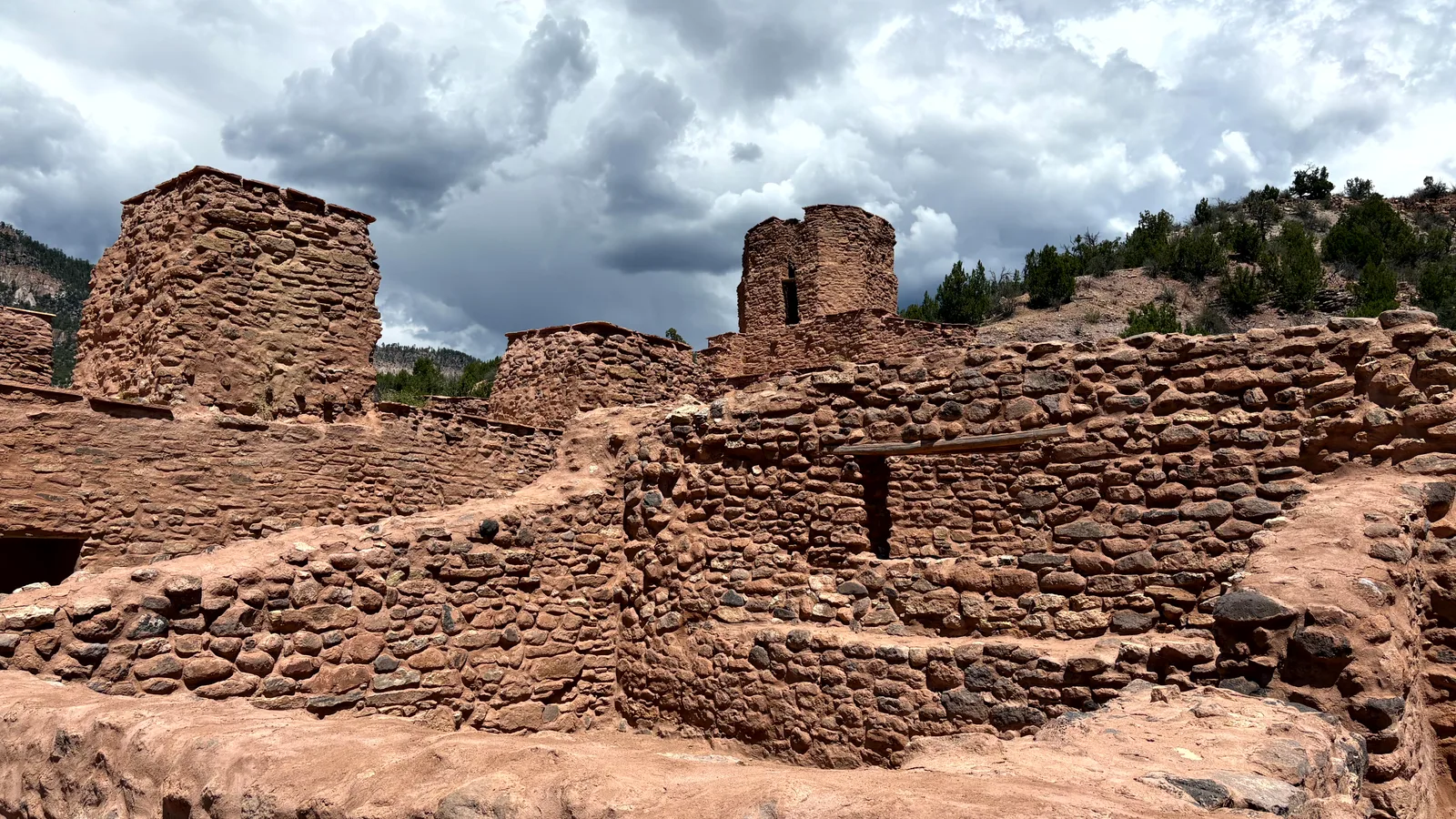
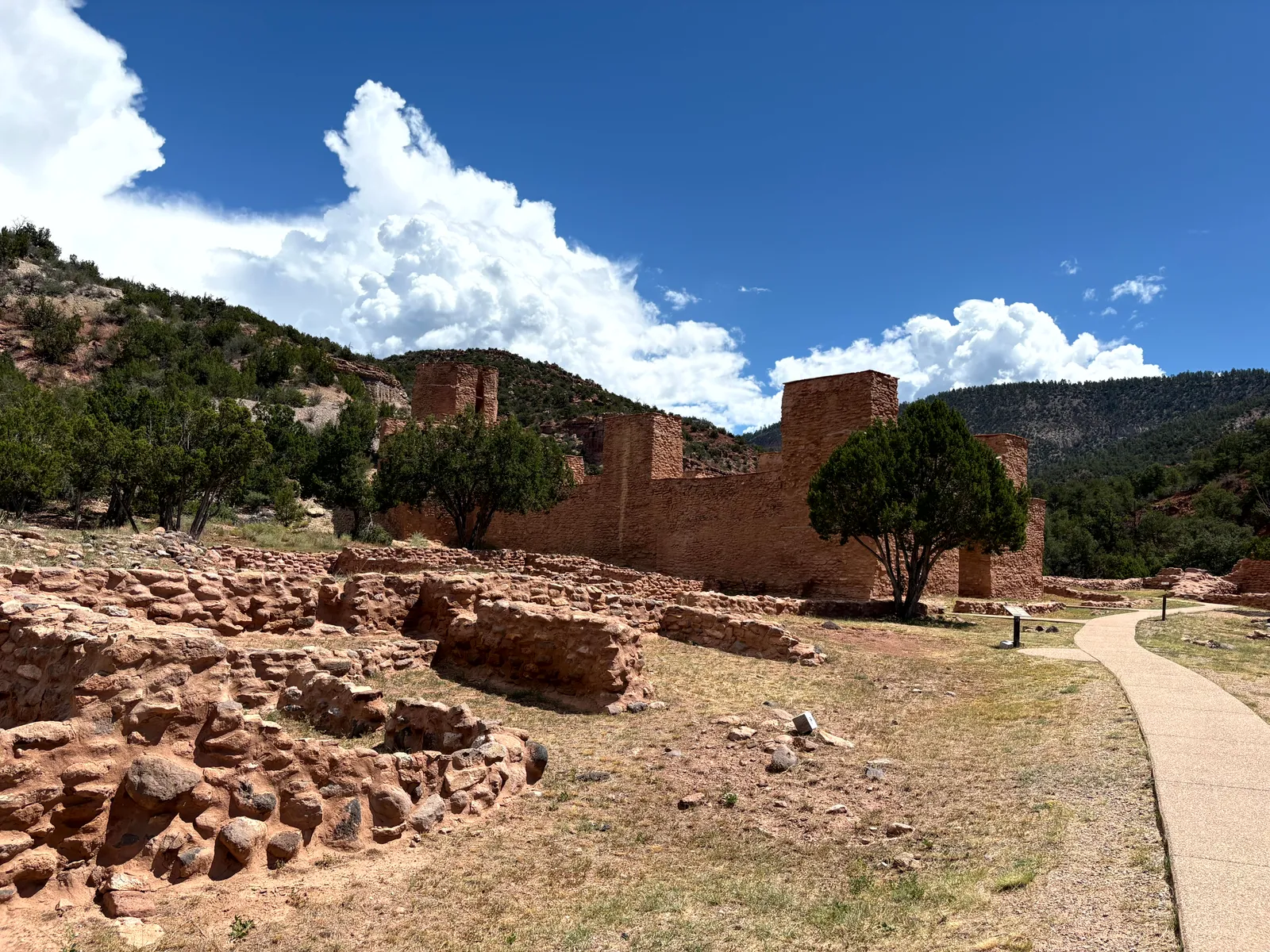
Jemez Historic Site preserves the ruins of Gisewa Pueblo and the massive stone remains of the San José de los Jémez Mission, set against the red cliffs of Jemez Springs.
The site is interesting because it tells two intertwined stories: the long history of the Jemez people in the canyon and the dramatic changes that followed Spanish colonization. Today, a short interpretive trail leads through the pueblo and church ruins, while exhibits in the visitor center present the site’s history from the perspective of the Jemez people.
Gisewa Pueblo
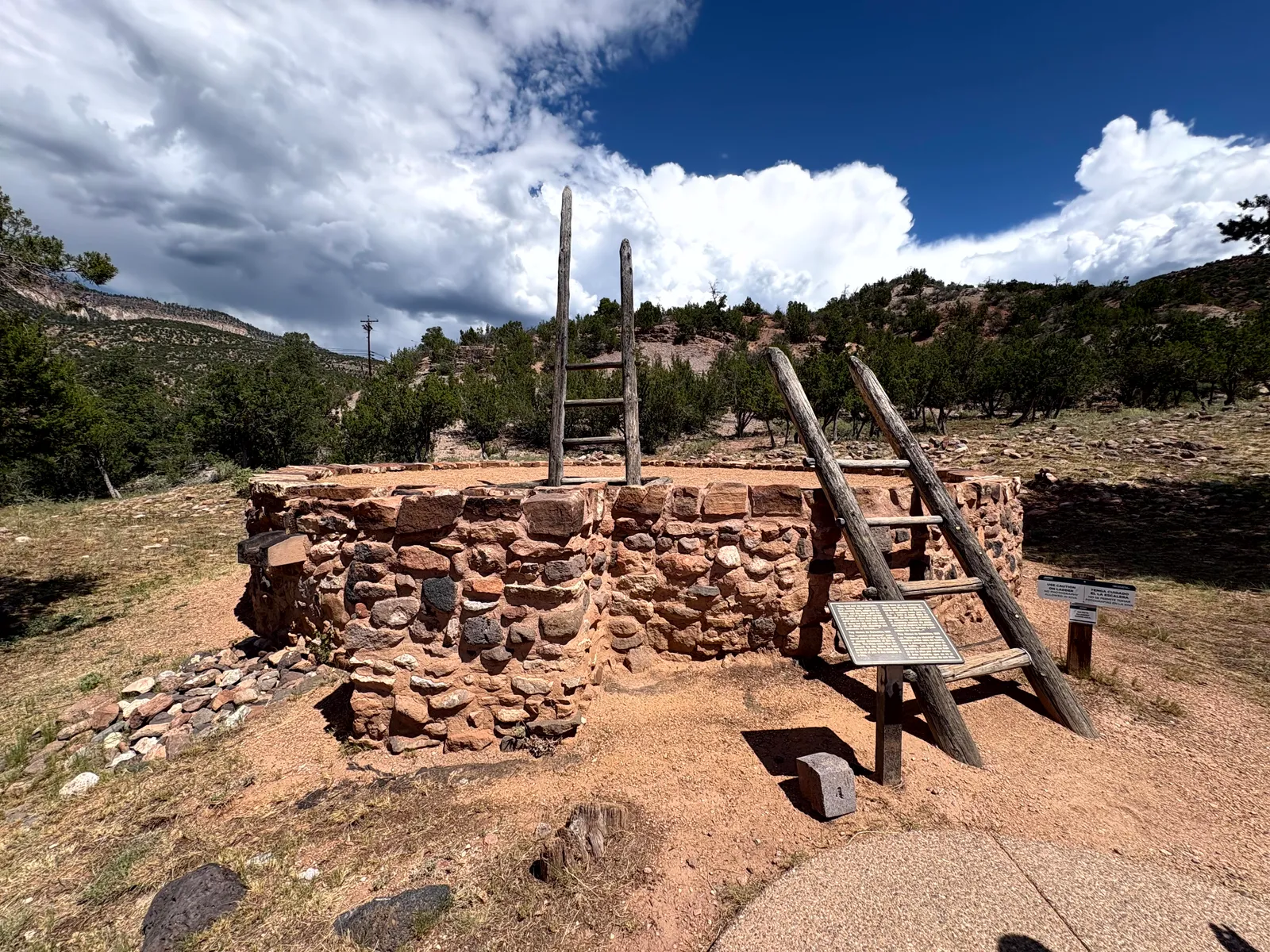
Ancestors of today’s Jemez Pueblo, or Walatowa, established Gisewa in the narrow San Diego Canyon roughly 700 years ago. Its name refers to the area’s abundant hot springs, which remain one of the defining features of Jemez Springs today.
Residents farmed corn, beans, and squash while hunting and gathering throughout the surrounding mountains. Gisewa was one of several large Jemez communities that once occupied this part of northern New Mexico.
San José de los Jémez Mission
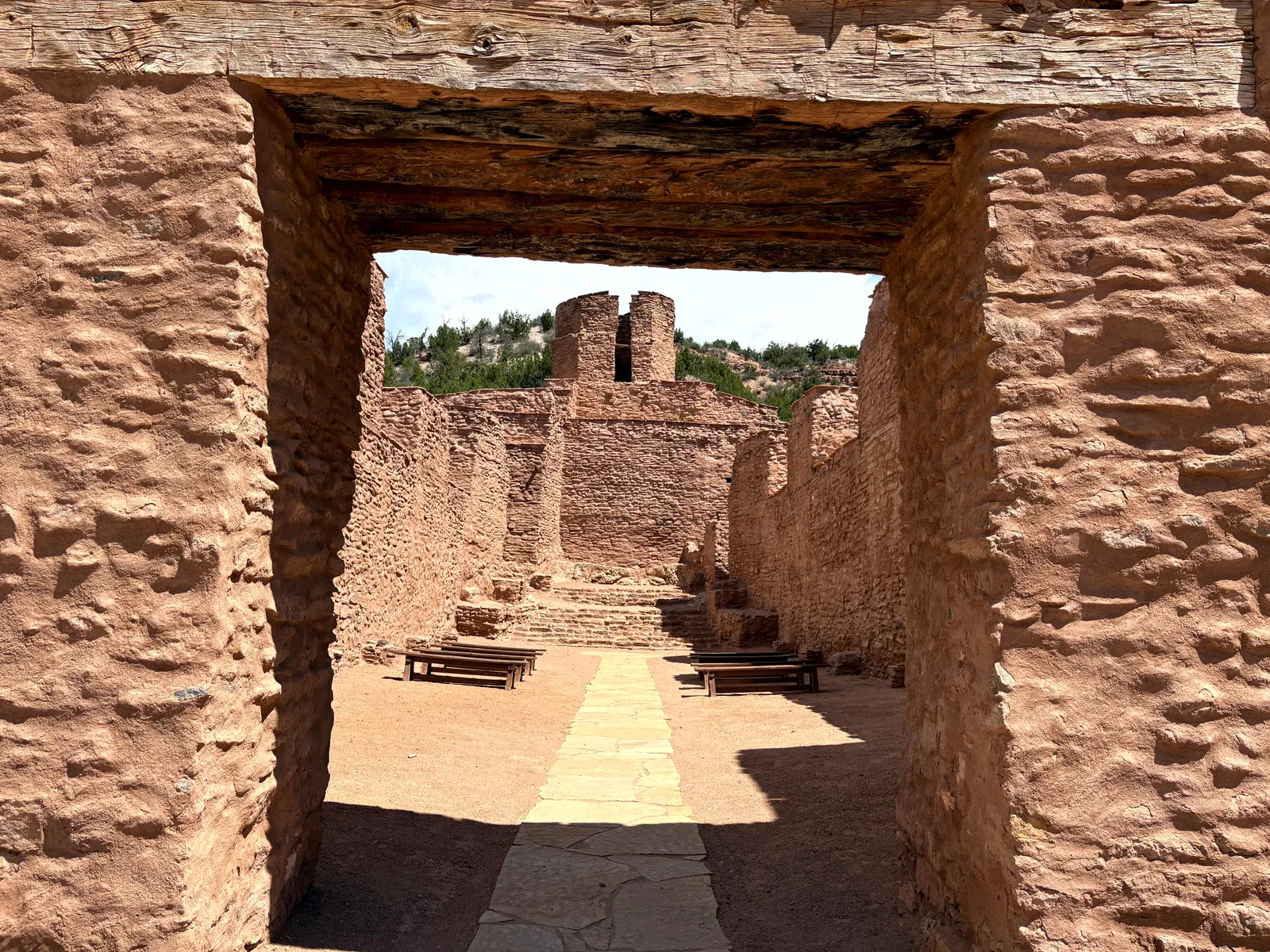
Spanish Franciscan missionaries arrived in the region during the early colonial period. Between 1621 and 1625, the Franciscans directed the construction of the enormous San José de los Jémez Mission, built with Jemez labor and local stone.
The church was unusually large, with walls reaching several feet thick and a rare octagonal bell tower. Archaeological excavations in the 1920s even uncovered traces of colorful frescoes that once decorated its interior.
The mission lasted only about two decades. Religious persecution, forced labor, and conflict associated with Spanish colonization placed enormous pressure on Pueblo communities, and San José de los Jémez was abandoned by 1640. Gisewa itself remained occupied until around the time of the Pueblo Revolt of 1680, when its residents moved to more defensible locations.
Exploring the Ruins
A roughly 1,400-foot interpretive trail winds through the seven-acre historic site. Visitors can walk among the foundations of Gisewa Pueblo before entering the towering stone shell of the mission church.
Although much of the pueblo has returned to the earth, the surviving church walls are imposing and provide a sense of just how substantial the complex once was. The surrounding red cliffs and narrow canyon make the ruins particularly scenic.
Lights of Gisewa
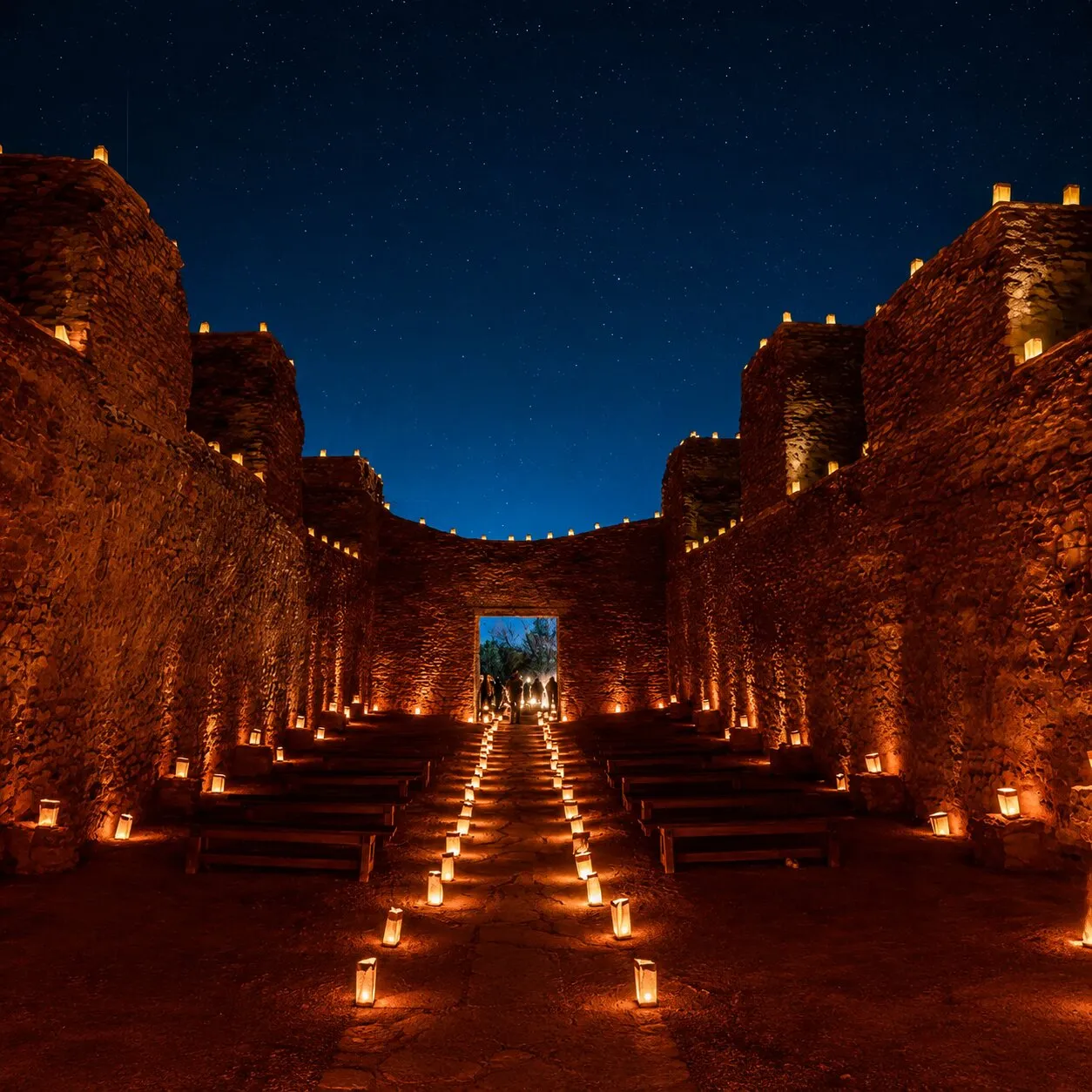
The “Lights of Gisewa”, is held annually on the second weekend of December. After dark, hundreds of traditional luminarias illuminate the ruins of Gisewa Pueblo and San José de los Jémez, turning the stone walls and pathways into one of the most atmospheric holiday settings in New Mexico.
Recent celebrations have also included bonfires, Pueblo dance groups, and other cultural programming. The event is popular enough to sell out, so check the historic site’s calendar and reserve tickets well in advance.
Visiting Jemez Historic Site
Jemez Historic Site is located directly along NM-4 in Jemez Springs, making it an easy stop while exploring the Jemez Mountains.
Allow around 45 minutes to an hour for the museum and ruins, or longer if you enjoy reading the interpretive exhibits.
Nearby places
Jemez Hot Springs
Hot spring facilities in the town of Jemez Springs
Jemez Springs
A tiny mountain village known for hot springs, red-rock scenery, and easy access to the Jemez Mountains.
Jemez Soda Dam
A natural dam across the Jemez River formed over centuries by mineral-rich hot spring deposits.